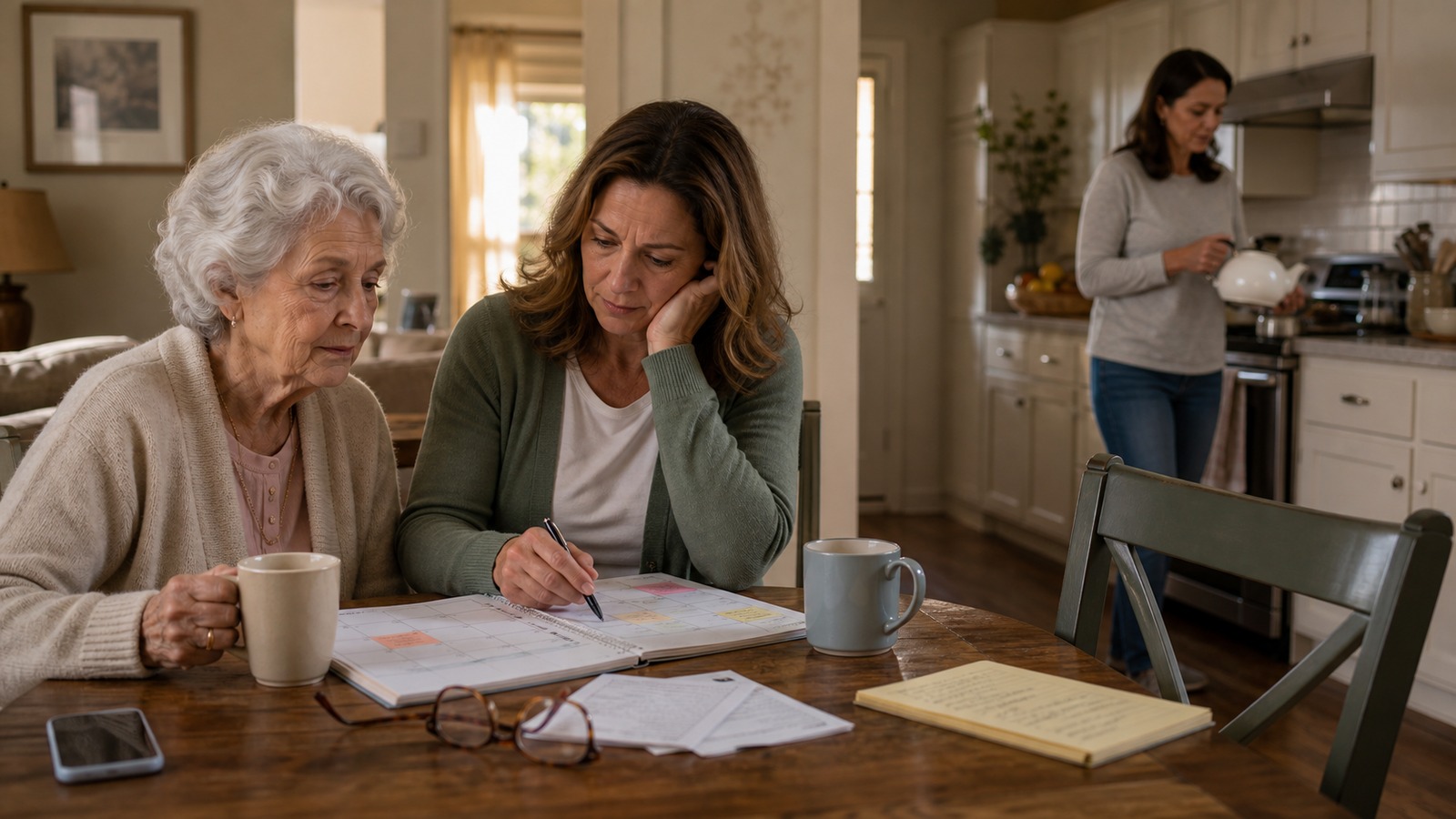
Many families wait for one clear moment before talking about assisted living. A fall. A hospital stay. A neighbor calling because the front door was left open. A daughter realizing her parent has not eaten a real meal in two days.
But the decision is usually not that simple. Most families do not wake up one morning and suddenly know, with certainty, that living alone is no longer working. More often, the signs appear slowly. The refrigerator looks emptier. Medications are confusing. Mail piles up. A once-social person stops answering calls. The house still looks familiar, but daily life inside it has become harder to manage.
So what does the research actually say? Is living alone in old age harmful? Is a small residential assisted living home better? The honest answer is that living alone is not automatically unsafe, and assisted living is not automatically the right answer for everyone. The better question is whether an older adult has the support, safety, routine, and human connection needed to live well.
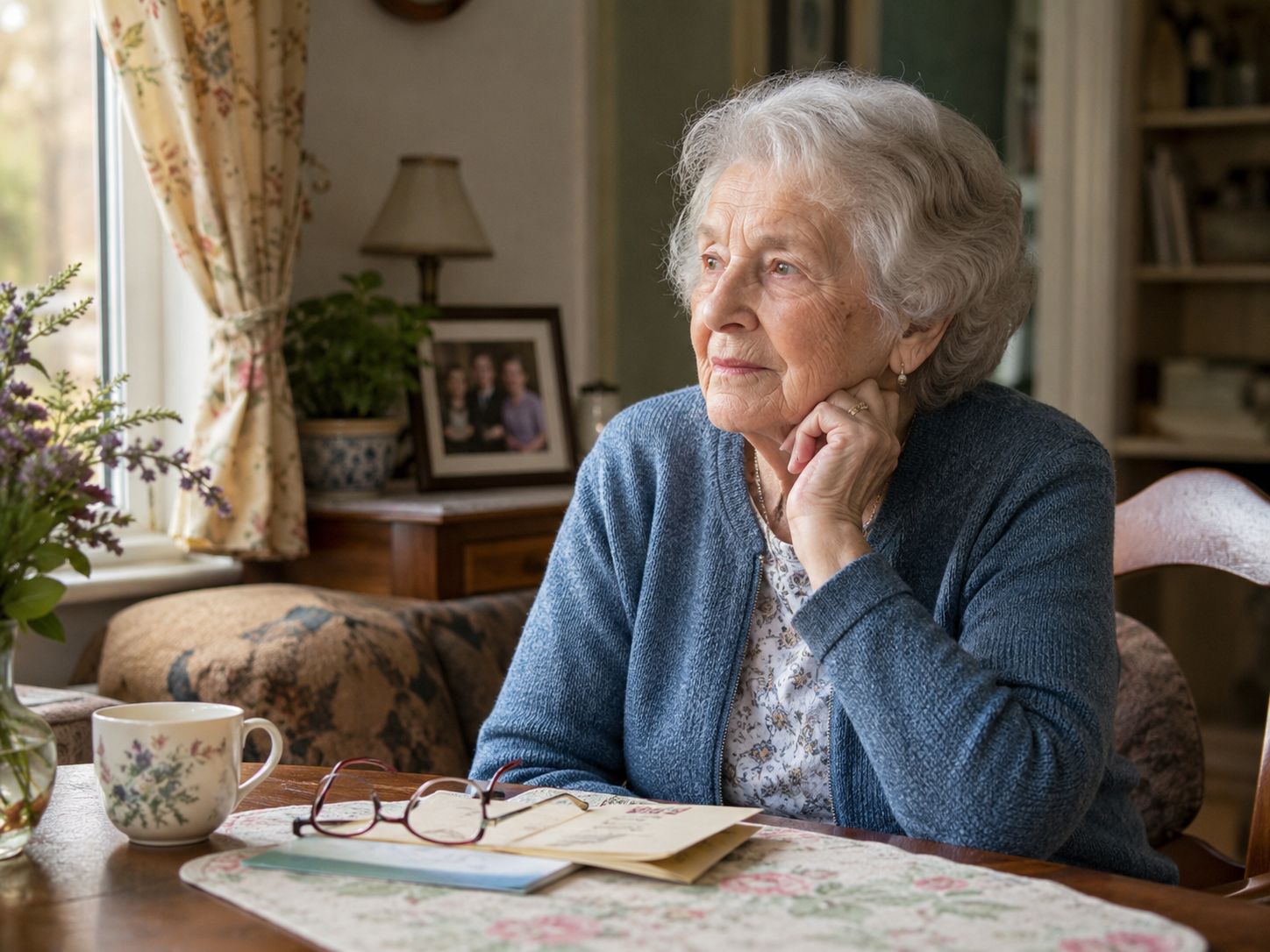
Living alone is not the same as being lonely
One important distinction matters: living alone, loneliness, and social isolation are related, but they are not the same thing.
Some older adults live alone and do very well. They have friends, neighbors, church members, family visits, transportation, good nutrition, safe mobility, and a routine that keeps them engaged. For those adults, living alone may support independence and personal dignity.
Other older adults live alone and quietly become isolated. They may go days without meaningful conversation. They may avoid bathing because the bathroom feels unsafe. They may skip meals because cooking feels exhausting. They may miss medications because the bottles are confusing. They may not tell family how much has changed because they do not want to be a burden.
The National Academies report on social isolation and loneliness in older adults makes this distinction clearly. Living alone can be one risk factor, but the deeper concern is whether a person lacks reliable social contact and support.
What research says about isolation and health
Social connection is not just a nice extra in later life. It is connected to health.
The CDC identifies social isolation and loneliness as risk factors linked with serious health concerns, including heart disease, stroke, type 2 diabetes, depression, anxiety, dementia, and premature death. The U.S. Surgeon General has also warned that weak social connection is associated with higher risk of premature mortality, heart disease, stroke, and dementia.
A large review of studies on older adults found that loneliness, social isolation, and living alone were each associated with increased risk of death over time. The strongest risks were tied to loneliness and social isolation, while living alone showed a smaller but still meaningful association. That matters because it tells families not to judge by address alone. A person can live alone and be well supported, or live alone and be deeply at risk.
For families, the question becomes practical: is your loved one still connected, noticed, and supported on ordinary days?
The safety question families feel before they can explain it
Safety is often what brings families to the conversation, even when they start by talking about loneliness. An older adult may say, "I am fine," but the pattern tells a different story.
Common warning signs include:
- Recent falls or close calls.
- Fear of bathing, walking, cooking, or going outside.
- Skipped meals or weight loss.
- Medication mistakes, missed doses, or duplicate doses.
- Unpaid bills, missed appointments, or confusion with mail.
- More calls to family because anxiety is rising.
- Less interest in hobbies, church, friends, or family routines.
- A home that is becoming harder to clean or maintain.
Falls deserve special attention. The CDC reports that more than one in four older adults fall each year. A fall can change everything, not only because of injury, but because it can reduce confidence. After one frightening incident, a person may move less, eat less, bathe less often, or stop doing the normal activities that kept them strong.
That is why families often feel uneasy before a crisis happens. They are not overreacting. They are noticing that independence now depends on too many fragile pieces staying in place at the same time.
When home still works
It is important to say this plainly: staying home can still be the right choice.
Home may still work when the older adult is eating well, taking medications correctly, bathing safely, moving safely, staying socially connected, keeping appointments, and accepting help when needed. Support can come from family, neighbors, home care, meal services, transportation programs, adult day programs, church communities, and medical providers.
In that situation, the goal may not be assisted living. The goal may be strengthening the support around the person so home remains safe and meaningful.
But home stops working when the support plan depends on hope. Hope that they remembered breakfast. Hope that they took the right pills. Hope that they did not fall. Hope that they will call if something goes wrong. Hope that the family caregiver can keep going without rest.
What small-home assisted living can change
A small residential assisted living home is not only about having a room somewhere else. At its best, it changes the daily rhythm around the person.
Instead of a person managing the day alone, support is built into the day. Meals happen. Medication routines are watched. Someone notices if appetite changes. Someone sees whether walking looks unsteady. Bathing, dressing, grooming, laundry, housekeeping, and daily routines are no longer left entirely to memory, strength, or motivation.
The small-home model can be especially meaningful for someone who feels overwhelmed by large buildings or busy campuses. Fewer residents can make it easier for caregivers to learn a person's habits, preferences, fears, and personality. A caregiver may notice that someone is quieter than usual, eating less than usual, or walking differently than usual because they know what usual looks like.
That kind of attention is difficult to measure in a simple checklist, but families understand it immediately. They are often not looking for a fancy building. They are looking for someone to know their loved one well enough to notice change.
What the research says about small-home care models
Research on small-home assisted living specifically is more limited than research on loneliness, social isolation, and nursing home models. That matters. Families deserve accuracy, not exaggerated claims.
Much of the strongest small-home research comes from small-house nursing home models, including the Green House model. These studies do not perfectly match every residential assisted living home, but they are useful because they examine care in smaller, more home-like environments compared with larger institutional settings.
Reviews of small-house long-term care models have found promising findings around quality of life, resident satisfaction, privacy, autonomy, relationships, and a less institutional daily experience. Some studies also report improvements in certain clinical or hospital-related outcomes, though the evidence is not the same across every study or setting.
The takeaway is not that every small home is automatically better. The takeaway is that environment matters. Size, staffing, relationships, routine, autonomy, meals, communication, and caregiver consistency all shape how care feels and how well a person is supported.
Assisted living does not automatically solve loneliness
Families should also know that moving into assisted living does not automatically remove loneliness. A person can feel lonely in a crowd. A large activity calendar does not guarantee belonging. A beautiful building does not guarantee connection.
That is why fit matters so much. Families should look beyond the tour path and ask what daily life actually feels like. Who sits with residents? Who notices if someone withdraws? How are meals handled? How often do caregivers change? How does the home communicate with family? What happens when a resident has a hard day?
The right setting should protect dignity, not just provide supervision. It should support independence where possible and step in where help is truly needed.
Questions to ask before deciding
If your family is trying to decide whether living alone is still safe, start with specific questions:
- Is my loved one eating real meals every day?
- Are medications taken correctly without confusion?
- Has there been a fall, near fall, or new fear of falling?
- Is bathing, dressing, toileting, or grooming becoming difficult?
- Does the person spend most days alone?
- Are bills, appointments, mail, or household tasks being missed?
- Is family support becoming constant, stressful, or unsustainable?
- Would daily structure make life safer and calmer?
Then ask a second set of questions about any care setting you are considering:
- How many residents live here?
- Who is present overnight?
- How are meals, medications, bathing, and laundry handled?
- How do caregivers learn each resident's routines?
- How does the team communicate with family?
- What care needs can this home support safely?
- What needs would require a different level of care?
How A Place Called Home thinks about care
A Place Called Home was created around a simple belief: care should feel personal. Our licensed DeSoto assisted living home is intentionally small, which allows our team to learn each resident's routines, preferences, needs, and personality. That matters because daily care is not only about tasks. It is about noticing the person.
For many families, our DeSoto home may be the right fit now. Whatever the timing, the conversation should begin with the person, not a sales pitch. What is changing at home? What feels unsafe? What support would make each day steadier?
The bottom line
Research does not say that every older adult who lives alone should move. It says something more useful: isolation, loneliness, falls, missed meals, medication problems, and unsupported daily needs are serious warning signs.
Living alone can be healthy when support is strong. It can become risky when support is thin, inconsistent, or built around crisis response. A small-home assisted living setting may help by adding meals, supervision, medication support, personal care, routine, and regular human connection in a calmer environment.
If your family is unsure, you do not have to solve the whole decision today. Start by naming what has changed. Then ask what kind of support would make life safer, more connected, and more dignified.
To talk through your loved one's needs, visit our services, learn about our DeSoto assisted living home, or contact A Place Called Home.
Research and helpful sources
- National Academies: Social Isolation and Loneliness in Older Adults
- CDC: Health risks of social disconnection
- U.S. Surgeon General: Our Epidemic of Loneliness and Isolation
- CDC: Older adult falls facts
- Aging Clinical and Experimental Research: Loneliness, social isolation, living alone, and mortality
- NCBI Bookshelf: Small house model review