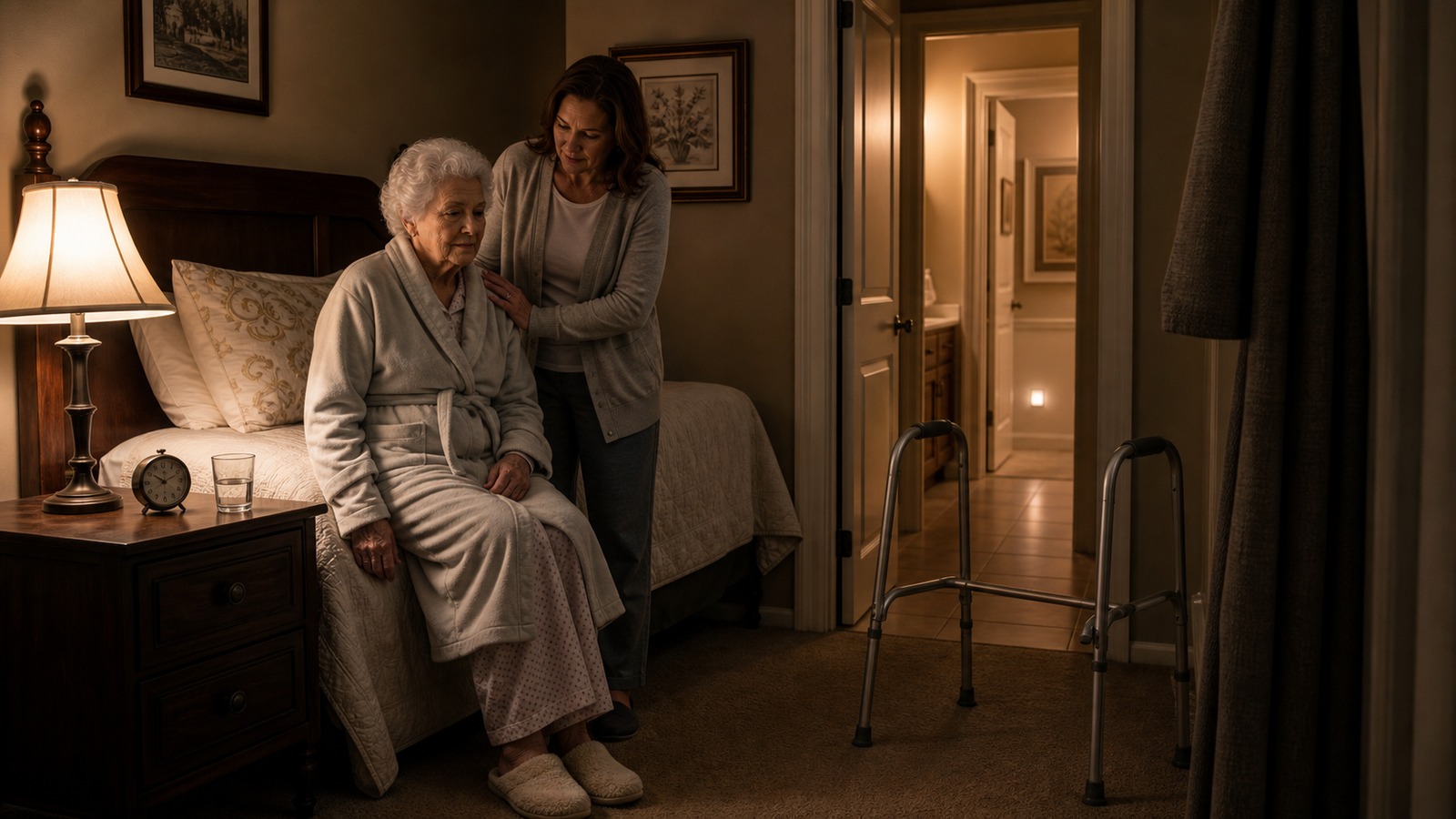

Caring for an aging parent often starts with small acts of love.
You pick up groceries. You drive Mom to a doctor's appointment. You remind Dad about a refill. You stop by after work to check the mail, take out the trash, or make sure dinner happened. At first, each task feels manageable.
Then the tasks begin to stack up.
Appointments multiply. Medication lists get longer. Phone calls come at odd hours. You worry about falls, meals, bathing, bills, loneliness, driving, memory changes, and whether your parent is telling you the whole story. You may still love helping, but you also feel tired in a way that rest does not fully fix.
That is often where caregiver burnout begins.
This article is for adult children and family caregivers who are trying to care well without losing themselves in the process. It is not medical advice, and it is not a replacement for professional guidance. But it can help families recognize when caregiving has become too heavy for one person to carry alone.
Caregiver burnout is not a character flaw
Many caregivers feel guilty admitting they are tired. They may think, "This is my parent. I should be able to handle it." But caregiving can become physically, emotionally, financially, and mentally demanding.
The National Institute on Aging encourages caregivers to take care of their own health, ask for help, and notice stress before it becomes overwhelming. That guidance matters because caregiver strain can affect sleep, mood, relationships, work, finances, and physical health.
Burnout does not mean you love your parent less. It means the care need may have grown larger than the support system around it.
Why adult children often miss the warning signs
Caregiver burnout rarely arrives all at once. It builds quietly.
You may not notice the change because each new responsibility feels like "just one more thing." One more call. One more errand. One more appointment. One more night sleeping with the phone nearby. One more weekend spent catching up on your parent's laundry, mail, medication list, and groceries.
Families also normalize stress because they are focused on the older adult. Everyone asks how Mom is doing. Fewer people ask how the caregiver is doing.
That is why the caregiver has to be included in the care conversation. A plan that only works when one adult child is exhausted is not a stable plan.
Signs caregiving may be taking too much from you
Every caregiver has hard days. The concern is when hard days become the normal routine.
Watch for signs such as:
- Feeling tired even after sleeping.
- Feeling irritable, resentful, anxious, or constantly on edge.
- Sleeping poorly because you are waiting for a call or worried about safety.
- Missing your own doctor appointments, meals, exercise, or rest.
- Falling behind at work or feeling distracted all day.
- Arguing more with siblings, a spouse, or your parent.
- Feeling guilty whenever you are not helping.
- Checking your phone constantly.
- Feeling like no one else understands how much you are carrying.
- Thinking, "I cannot keep doing this," then judging yourself for thinking it.
If several of these feel familiar, it may be time to change the care plan, not simply push harder.
Signs your parent may need more daily support
Caregiver burnout often grows when a parent's needs are no longer occasional. The family may still describe the situation as "helping out," but the pattern looks more like daily care coordination.
Pay attention if your parent is experiencing:
- Missed meals or poor hydration.
- Medication confusion, missed refills, or duplicate bottles.
- Falls, near falls, or fear of walking alone.
- Skipped bathing, laundry, or grooming.
- Unpaid bills, unopened mail, or missed appointments.
- Isolation and long stretches without meaningful conversation.
- Unsafe driving or difficulty arranging transportation.
- Nighttime wakeups or bathroom trips that create safety concerns.
- Repeated hospital visits or urgent calls.
- A home that no longer supports safe daily routines.
These signs do not automatically mean assisted living is the only answer. They do mean the current support plan deserves a closer look.
Research shows many families are carrying significant care responsibilities
Family caregiving is common across the United States. The AARP and National Alliance for Caregiving report, Caregiving in the U.S. 2025, describes the scale of family caregiving and the demands placed on unpaid caregivers. Many caregivers are balancing care with jobs, children, finances, distance, and their own health needs.
The CDC's caregiving resources also recognize that caregivers can experience stress and need support. The message is not complicated: caregiving is real work, even when it is unpaid and done out of love.
That matters for families because love alone does not create a sustainable care system. A sustainable care system needs people, routines, backup plans, realistic expectations, and the right level of support.
Start by separating love from logistics
One of the hardest parts of caring for a parent is emotional confusion. Families often mix two separate questions:
"Do I love my parent?"
"Can I personally provide or coordinate everything my parent now needs?"
The answer to the first question may be yes. The answer to the second may still be no.
That does not make you selfish. It makes you honest. A parent may need more daily structure than one family member can provide after work, across town, or in between other responsibilities.
What families can try before a move
Some families can reduce caregiver strain by strengthening the home plan. That may include:
- Shared calendars for appointments and medication refills.
- Clear sibling roles instead of vague offers to help.
- Meal delivery or prepared meals.
- Transportation support.
- Home safety changes such as better lighting, grab bars, and reduced clutter.
- Medication review with a pharmacist or healthcare professional.
- Home care services when appropriate.
- Adult day programs or respite options.
- Regular check-ins from trusted family, friends, or neighbors.
The key is to measure whether the plan actually works. If the caregiver is still overwhelmed, the parent is still unsafe, or the family is still operating in crisis mode, more support may be needed.
When assisted living becomes part of the conversation
MedlinePlus describes assisted living as housing for people who need help with daily care but do not need the level of medical care provided in a nursing home. That distinction is important. Assisted living is not a hospital and does not replace physicians, emergency care, therapists, or specialists.
But assisted living can support the daily routines that often create caregiver strain at home.
Depending on the resident's needs, care plan, and state rules, assisted living may help with:
- Regular meals and hydration routines.
- Medication reminders or medication support within allowed scope.
- Bathing, dressing, grooming, and personal care.
- Safer movement through the day.
- Social connection and less time alone.
- Observation when appetite, mood, energy, or mobility changes.
- Communication with family when something seems different.
For some families, assisted living is not about stepping away. It is about changing the role of the adult child from exhausted daily manager back toward daughter, son, or loved one.
How to talk with your parent without making it feel like a threat
Many older adults fear losing control. If the conversation begins with "You cannot live alone anymore," the parent may shut down or become defensive.
Try starting with honesty and respect:
"I love helping you, and I want you to be safe. I am also realizing that the current routine is getting harder for both of us. Can we talk about what kind of support would make daily life easier?"
This approach does not force a decision in the first conversation. It opens the door.
Families can also ask:
- What parts of the day feel hardest right now?
- Are meals, medications, bathing, and appointments feeling manageable?
- Do you feel lonely during the day?
- Do you feel safe at night?
- Would you be open to touring a smaller home setting just to understand the option?
The goal is not to win an argument. The goal is to create a more honest care plan.
How A Place Called Home supports families
A Place Called Home was created for families who want senior care that feels personal, calm, and familiar. Our licensed DeSoto assisted living home is intentionally small, which helps caregivers learn each resident's routines, preferences, and daily patterns.
For family caregivers, that can bring relief. Instead of one adult child carrying every detail alone, the resident has daily support around meals, personal care, routines, and observation. The family still stays involved, but the weight is shared.
Families in DeSoto, Duncanville, Cedar Hill, Lancaster, Red Oak, Glenn Heights, Waxahachie, and nearby DFW communities often begin this conversation after months of worry.
If caregiving is starting to affect your health, sleep, work, or peace of mind, it may be time to ask what kind of support would help both your parent and you.
The bottom line
Caring for Mom or Dad can be one of the most meaningful things you ever do. It can also become too much for one person to manage alone.
Notice the signs. Talk earlier. Ask for help. Review the home plan honestly. And if daily routines are becoming unsafe or unsustainable, consider whether assisted living or another support option may protect the whole family, not just the older adult.
To learn more, visit our services, read about our DeSoto assisted living home, or contact A Place Called Home to talk through your family's needs.