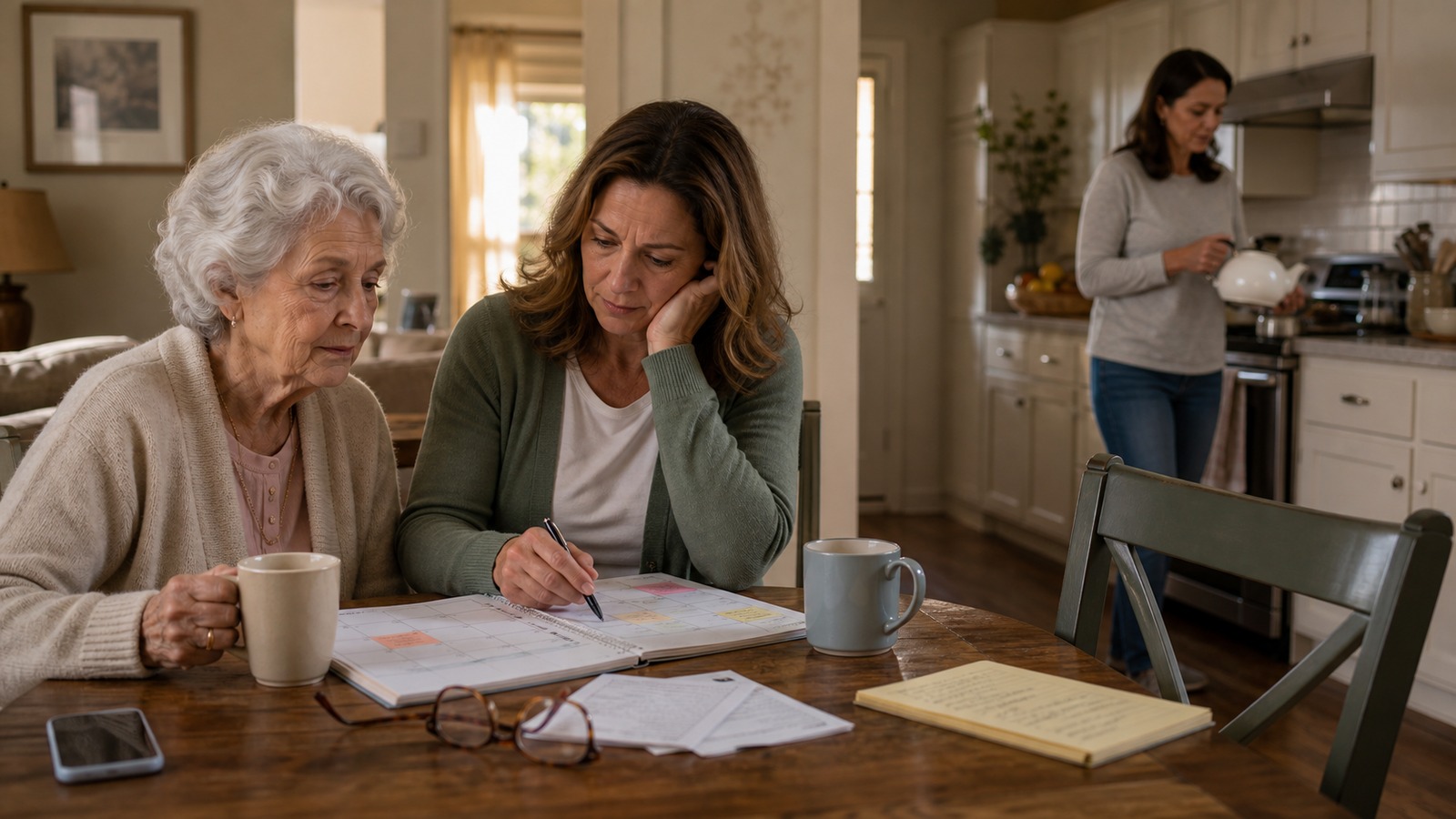
Families often notice sleep changes before they know what those changes mean.
Mom is awake at 2 a.m. more often. Dad naps through the afternoon, then cannot settle at night. A loved one starts getting up for the bathroom several times after midnight. The morning feels slower. Medications are taken late. Breakfast is skipped. A shower feels like too much effort. By evening, everyone is tired again.
At first, it may sound like a sleep problem only. But in older adulthood, poor sleep can spill into the whole day. It can affect strength, balance, mood, memory, appetite, medication routines, and confidence. For adult children, it can also create a familiar question: is this still safe at home?
This article is not medical advice, and assisted living does not treat sleep disorders. Sleep changes should be discussed with a healthcare professional, especially when they are sudden, severe, connected to pain, breathing issues, medication changes, confusion, depression, or falls. But families can still learn what to watch for and when nighttime patterns may point to a need for more daily support.
Sleep changes are common, but patterns matter
Some sleep changes are common with age. Older adults may feel sleepy earlier, wake earlier, sleep more lightly, or wake up more often during the night. That does not mean every change is dangerous.
The concern is the pattern around the sleep change.
For example, one restless night is normal. Several weeks of poor sleep followed by daytime weakness, missed meals, medication confusion, or repeated nighttime bathroom trips deserves attention. A loved one who says "I just do not sleep like I used to" may also be describing pain, anxiety, loneliness, a medication side effect, sleep apnea symptoms, urinary symptoms, or a home routine that no longer works well.
The National Institute on Aging encourages older adults to talk with a doctor if they regularly have trouble sleeping or feel tired during the day. That is a practical place for families to start.
Why sleep matters for senior safety
Sleep is not just rest. It supports attention, memory, mood, reaction time, immune function, and physical recovery. When sleep is poor, ordinary daily tasks can become harder.
The CDC explains that not getting enough sleep is linked with health concerns such as heart disease, type 2 diabetes, obesity, and depression. For older adults, families often see the impact in very everyday ways: less energy to cook, more trouble getting dressed, less patience, more forgetfulness, or less confidence walking through the house.
Poor sleep can also affect the family caregiver. If an adult child is calling late at night, sleeping with the phone on, or driving over after repeated worries, the sleep problem may already be affecting two households.
Nighttime wakeups can become a fall concern
One of the most important patterns to watch is getting up at night.
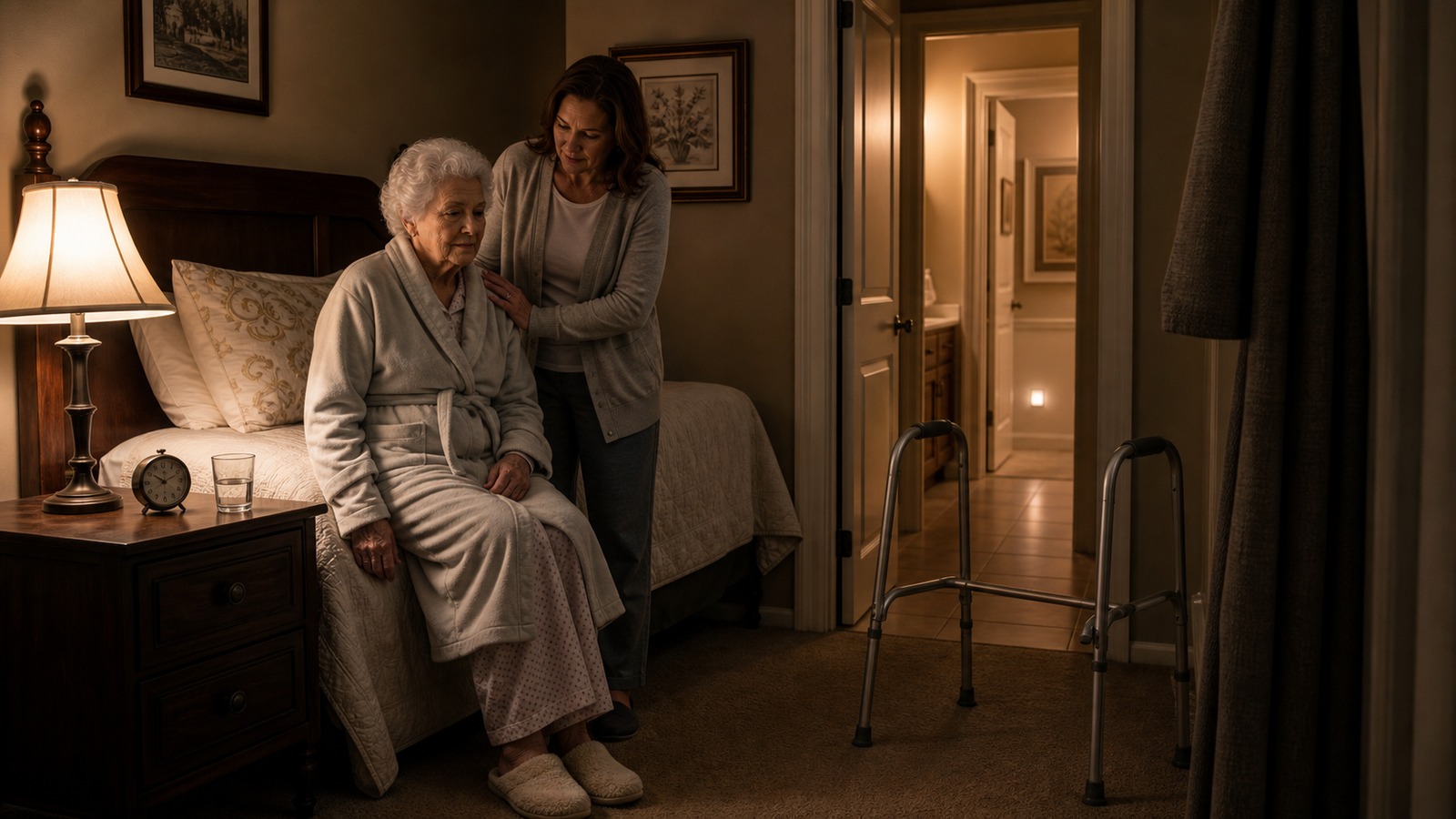
A nighttime bathroom trip may sound harmless, but it can combine several risks at once: low lighting, grogginess, urgency, dizziness, slippers, rugs, furniture, stairs, and a body that is not fully steady yet. If a loved one uses a cane or walker during the day but forgets it at night, the risk can grow.
The CDC's fall prevention guidance emphasizes reviewing medicines, checking vision and feet, staying active when appropriate, and making the home safer. Families can apply that same thinking to nighttime routines. The path from bed to bathroom matters. So does lighting, footwear, hydration timing, medication timing, and whether the person can ask for help when needed.
If nighttime wakeups are frequent, sudden, or connected to dizziness, pain, confusion, shortness of breath, or urinary symptoms, involve a healthcare professional. Do not treat it as just "getting older."
What families should notice at home
Families do not need to become sleep experts. They need to notice whether sleep changes are starting to change daily life.
Pay attention to:
- Frequent nighttime bathroom trips or wandering around the home at night.
- Daytime sleepiness that interferes with meals, bathing, appointments, or medications.
- New confusion in the evening, overnight, or early morning.
- More falls, near falls, or fear of walking after dark.
- Sleeping in a recliner because getting in or out of bed is difficult.
- Missed medications because the day starts late or feels disorganized.
- Low appetite or skipped breakfast after poor sleep.
- Less interest in conversation, hobbies, or leaving the house.
- Family members checking in more often because nights feel uncertain.
One item on this list does not automatically mean assisted living is needed. Several items repeating together means the family should take the pattern seriously.
Medication, pain, breathing, mood, and sleep are connected
Sleep changes can have many causes. Some are medical. Some are environmental. Some are emotional. Some are related to routines.
Medication timing or side effects may affect sleep. Pain may make it hard to stay comfortable in bed. Anxiety or grief may make nights feel long. Breathing problems or possible sleep apnea may disrupt rest. Memory changes may make evenings more confusing. Depression can affect both sleep and daytime energy.
The MedlinePlus sleep disorders resource explains that sleep problems can include trouble falling asleep, trouble staying asleep, and abnormal behaviors during sleep. Families should not guess at the cause. A doctor, pharmacist, or qualified healthcare professional can review symptoms, medications, medical history, and next steps.
For families, the useful role is to bring clear observations. Write down when the sleep change started, how often it happens, what changed recently, what medications were added or changed, whether falls or confusion happened, and what the daytime impact looks like.
Small routine changes may help, but they need follow-through
Some families can improve safety and routine at home with practical steps. Those steps may include better lighting, a clear path to the bathroom, safer footwear, a reachable phone, a medication review, regular meals, daytime activity as recommended, less evening clutter, and a calmer bedtime routine.
But the key is follow-through.
A nightlight only helps if it is placed where it is needed. A walker only helps if it is used at 2 a.m. A pill organizer only helps if it is filled correctly and checked. A bedtime routine only helps if the day has enough structure to support it.
This is where families sometimes discover that the issue is not one missing tool. The issue is that the person needs more steady support around the whole day.
When poor sleep points to a bigger care conversation
It may be time to talk about assisted living or another more supported care plan when sleep changes are connected to daily safety and family worry.
Consider a bigger conversation if:
- Your loved one is repeatedly up at night and unsafe walking alone.
- Falls or near falls happen during nighttime bathroom trips.
- Daytime fatigue causes missed meals, skipped bathing, or missed medications.
- Family members are losing sleep because they are worried about overnight safety.
- The person is isolated during the day, then anxious or unsettled at night.
- The current home routine only works when one caregiver is constantly available.
- Medication, hydration, meals, and personal care are becoming inconsistent.
- The loved one says they are fine, but the home no longer looks or feels steady.
The goal is not to scare anyone into moving. The goal is to ask whether the current setup is giving the person enough help for the life they are actually living now.
How assisted living can support a steadier rhythm
MedlinePlus describes assisted living as housing for people who need help with daily care but do not need the level of medical care provided in a nursing home. That distinction is important. Assisted living is not a hospital, and it does not replace doctors, pharmacies, therapists, or emergency care.
What assisted living can often add is structure and human presence.
Depending on the resident's needs, care plan, and state rules, assisted living may support:
- Regular meals and hydration routines.
- Help with bathing, dressing, grooming, and daily tasks.
- Medication reminders or medication support within allowed scope.
- Observation when appetite, mood, movement, or energy changes.
- Safer routines around mornings, evenings, and nighttime needs.
- Less isolation during the day.
- Communication with family when something seems different.
For some families, that steady daily rhythm is exactly what home has been missing.
How A Place Called Home thinks about nighttime safety
A Place Called Home was created for families who want care that feels calm, personal, and familiar. Our licensed DeSoto assisted living home is intentionally small, which helps caregivers learn each resident's normal routines, preferences, and daily patterns.
That matters because change is easier to notice when a person is known. Is someone more tired than usual? Eating less at breakfast? Moving differently in the morning? Avoiding a shower after a poor night? Seeming more anxious after dark? In a smaller home setting, these details are part of the care conversation.
Families in DeSoto, Duncanville, Cedar Hill, Lancaster, Red Oak, and nearby communities may start this conversation after a fall, a hospital stay, medication concerns, or repeated nighttime worry.
If nighttime routines have become a source of stress, a private tour can help your family compare the current home setup with the support your loved one may need.
The bottom line
Sleep changes are not always a crisis. But when disrupted nights begin changing the day, families should pay attention.
Watch for patterns around nighttime bathroom trips, daytime fatigue, missed meals, medication confusion, falls, mood changes, and caregiver strain. Bring those observations to healthcare professionals. Make the home safer where possible. And if home no longer has enough support around it, start the care conversation before the next emergency decides for you.
To learn more, visit our services, read about our DeSoto assisted living home, or contact A Place Called Home to talk through your family's needs.