
The Dallas-Fort Worth metroplex is known for growth. New subdivisions, expanding highways, corporate relocations, and fast-growing cities like Frisco, McKinney, Celina, Mansfield, Waxahachie, and Midlothian make it easy to think of DFW as young, busy, and constantly moving.
But another story is unfolding at the same time. North Texas is also growing older.
More adult children are caring for aging parents while raising families of their own. More seniors are trying to remain independent in homes that may no longer fit their daily needs. More families are comparing home care, assisted living, residential care homes, and larger senior communities across Dallas, Tarrant, Collin, Denton, and Ellis counties.
This does not mean every older adult needs assisted living. Many seniors do well at home with the right support. But it does mean DFW families should start care conversations earlier, before a fall, hospitalization, medication mistake, or caregiver burnout forces a rushed decision.
DFW growth is not just about young families
The North Central Texas Council of Governments tracks regional growth across the metroplex. Its population estimates show that North Texas continues to add residents at a large scale, with millions of people spread across Dallas, Tarrant, Collin, Denton, Ellis, and surrounding counties.
That growth matters for senior care because families are more spread out than they used to be. An adult child may live in Frisco while Mom lives in DeSoto. A daughter may work in Dallas while Dad lives in Arlington. A son may be in Prosper while his parents are in Cedar Hill, Lancaster, Duncanville, or Red Oak. Even when everyone is technically "in DFW," daily help may still be 30, 45, or 60 minutes away.
When older adults need only occasional help, that distance may feel manageable. When meals, bathing, medication routines, transportation, fall risk, loneliness, or nighttime safety become daily concerns, distance can quickly become a care problem.
The senior population is large across the metroplex
The U.S. Census Bureau QuickFacts shows that every major DFW county has a meaningful older adult population. Dallas County, Tarrant County, Collin County, Denton County, and Ellis County each have tens of thousands of residents age 65 and older, and in some areas the share of older adults continues to rise as long-time residents age in place.
The Texas Demographic Center has also projected continued aging across Texas. For families, the important point is simple: senior care is not a distant issue. It is already part of everyday life in North Texas.
Many families do not think about assisted living until a crisis happens. But DFW's size and growth make planning more important. The right care setting may not be available at the exact moment a family needs it. Touring, asking questions, comparing options, understanding pricing, reviewing licensing, and talking with parents all take time.
Why aging at home can become harder in DFW
Many older adults want to stay home. That is understandable. Home is familiar. Home holds memories. Home feels like independence.
But a home that worked well at age 68 may not work the same way at age 82.
In DFW, aging at home can become harder for practical reasons:
- Family members may live across the metroplex and cannot check in quickly.
- Traffic can turn a simple visit into a major time commitment.
- Doctor appointments may require long drives or complex transportation.
- Older homes may have steps, narrow bathrooms, poor lighting, or fall hazards.
- Suburban neighborhoods may be isolating if a senior no longer drives.
- Meal preparation, shopping, laundry, and medication routines may become inconsistent.
- Adult children may be balancing caregiving with work, children, and their own health.
None of these concerns means a senior has failed. They simply show that independence often depends on the support around a person.
Falls, isolation, and daily routines should not be ignored
Families often focus on whether a parent is "safe enough" at home. That is the right question, but it should be asked in detail.
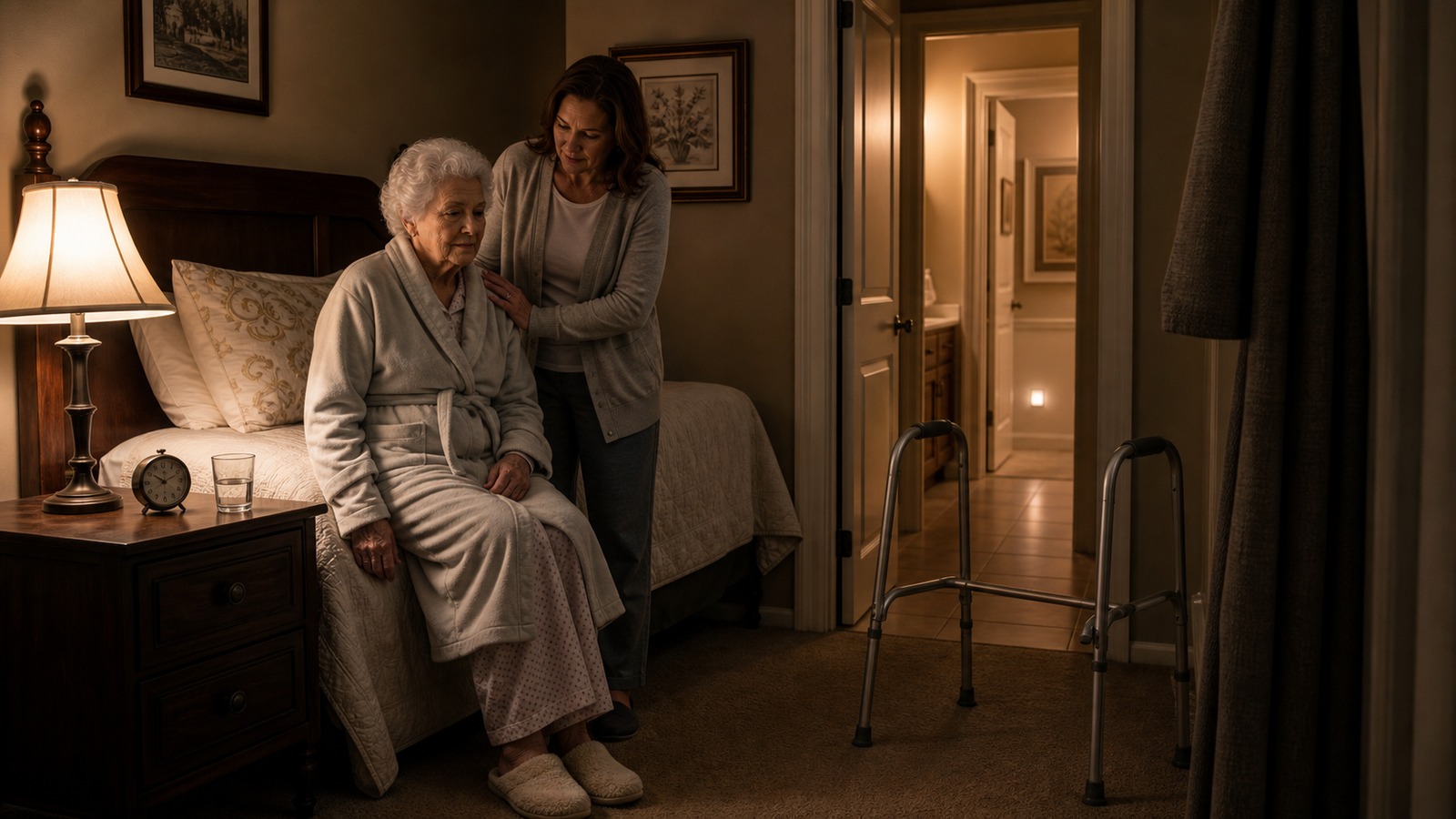
The CDC's fall prevention guidance encourages families to look at medications, vision, footwear, physical activity, and home safety. In real life, that can mean asking whether Mom can safely get to the bathroom at night, whether Dad is holding furniture while walking, or whether the shower has become something a parent avoids because it feels risky.
Social isolation is another concern. The National Institute on Aging notes that loneliness and social isolation are linked with health risks for older adults. A senior may have a house, a phone, and family nearby, but still spend most days alone.
Daily routines matter too. Missed meals, skipped bathing, medication confusion, unopened mail, repeated pharmacy calls, or a refrigerator with very little fresh food can all tell a bigger story. Families should look for patterns, not just emergencies.
What assisted living is meant to support
MedlinePlus describes assisted living as housing for people who need help with daily care but do not need the level of medical care provided in a nursing home. That distinction matters.
Assisted living is not a hospital. It does not replace physicians, emergency care, specialists, pharmacists, or therapy. But it can support the daily life that often becomes difficult at home.
Depending on the resident's needs, care plan, and state rules, assisted living may help with:
- Meals and hydration routines.
- Medication reminders or medication support within allowed scope.
- Bathing, dressing, grooming, and personal care.
- Mobility support and safer daily routines.
- Social connection and less time alone.
- Observation when appetite, mood, energy, or movement changes.
- Communication with family when something seems different.
For many families, the value is not only the task being done. The value is consistency.
Why smaller residential assisted living can fit some DFW families
DFW families have many senior care options, including large assisted living communities, independent living, memory care, home care, adult day programs, nursing facilities, and smaller residential assisted living homes.
A smaller residential assisted living setting may be a good fit for a senior who needs daily support but would feel overwhelmed in a large campus environment. Some families want a setting that feels more like a real home, where caregivers can learn the resident's routines, personality, food preferences, sleep patterns, and normal daily rhythm.
This is especially important when families are watching subtle changes. Is Mom eating less than usual? Is Dad more unsteady in the morning? Is a parent withdrawing from conversation? Is bathing becoming harder? Is medication timing becoming inconsistent? In a smaller setting, these changes may be easier to notice and discuss.
Small does not automatically mean better for every person. The right fit depends on care needs, staffing, licensing, layout, safety, activities, personality, family expectations, and whether the provider can appropriately support the resident. Families should tour, ask direct questions, and compare options carefully.
Questions DFW families should ask before a crisis
Because the metroplex is large and care options vary, families should begin with practical questions:
- Who checks on Mom or Dad each day?
- How far away is the nearest family member who can respond quickly?
- Are meals, medications, bathing, laundry, and housekeeping consistent?
- Has there been a fall, near fall, hospitalization, or medication mistake?
- Is the parent still driving safely?
- Does the home support safe movement, showering, and nighttime bathroom trips?
- Is the senior lonely during the day?
- Is one family caregiver carrying most of the responsibility?
- Would more daily structure reduce risk and stress?
- What care options are available near the family, not just near the parent's old address?
These questions can feel uncomfortable, but they are much easier to answer before a crisis.
Planning across DeSoto, Dallas, Plano, and the wider DFW area
A Place Called Home serves families who want senior care that feels personal, calm, and familiar. Our licensed DeSoto assisted living home is intentionally small, giving our team the opportunity to learn each resident's routines and provide support in a real home setting.
That matters for families across southern Dallas County and nearby communities such as DeSoto, Duncanville, Cedar Hill, Lancaster, Red Oak, Glenn Heights, and Waxahachie. It also matters for families who live elsewhere in the metroplex but are helping a parent in the southern DFW area.
For many families, the question is not simply, "Is there an assisted living facility nearby?" The better question is, "Where will my parent be known, supported, and watched over in a way that fits their daily life?"
The bottom line
DFW is growing, and North Texas families are aging along with it. More people, more traffic, more spread-out households, and more older adults mean senior care planning needs to happen earlier.
If your parent is still safe and steady at home, support that independence with a real plan. If daily routines are slipping, if family check-ins are becoming constant, or if safety concerns are growing, start comparing care options before an emergency forces a decision.
Assisted living is not about giving up on independence. For the right person, it can be a way to protect dignity, create routine, reduce isolation, and make daily life safer.
To learn more, visit our services, read about our DeSoto assisted living home, or contact A Place Called Home to talk through your family's needs.
Research and helpful sources
- North Central Texas Council of Governments: Regional data and planning
- U.S. Census Bureau QuickFacts: County demographic data
- Texas Demographic Center: Texas population projections and aging data
- CDC: Preventing Falls and Hip Fractures
- National Institute on Aging: Loneliness and Social Isolation
- MedlinePlus: Assisted Living