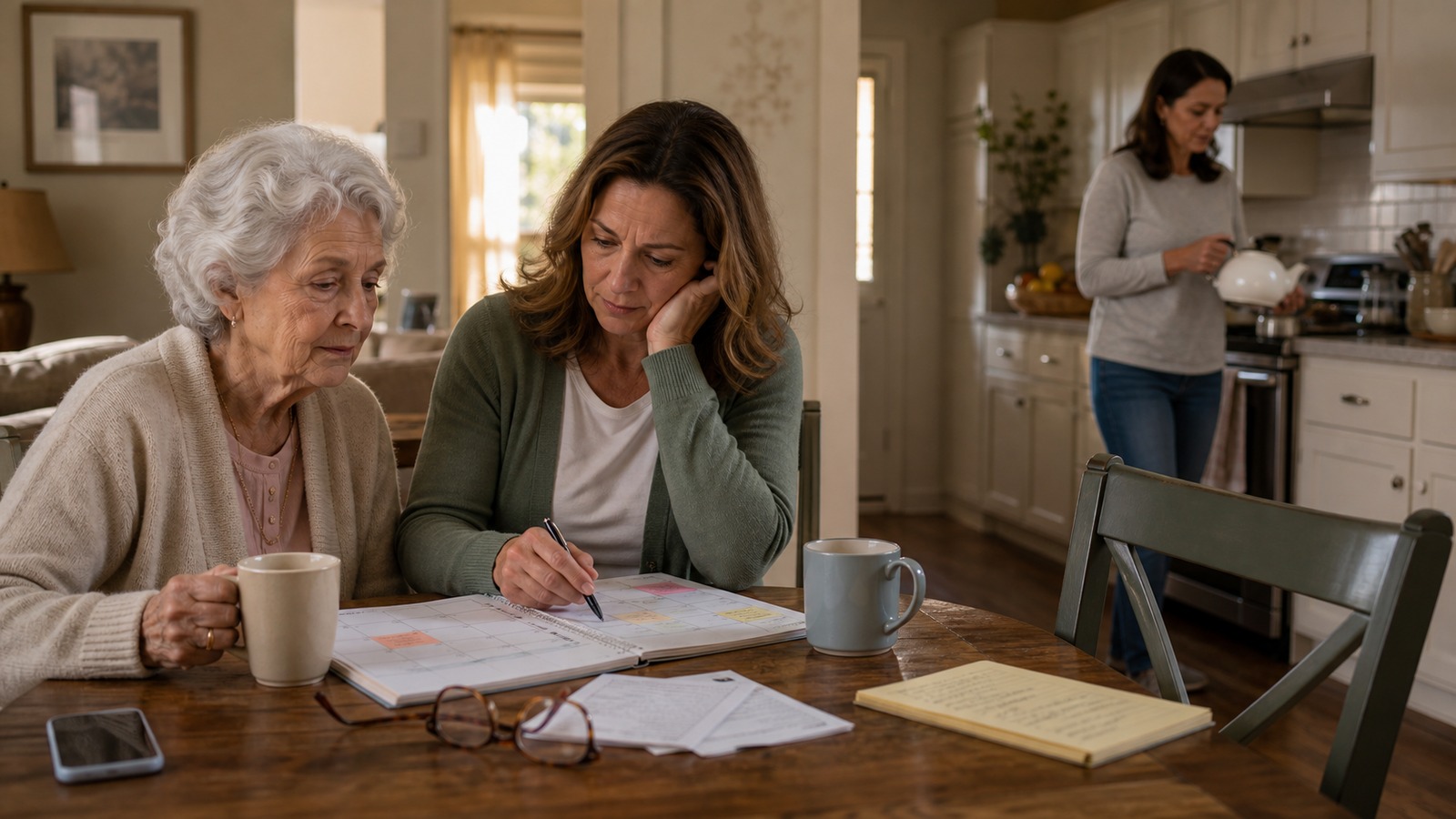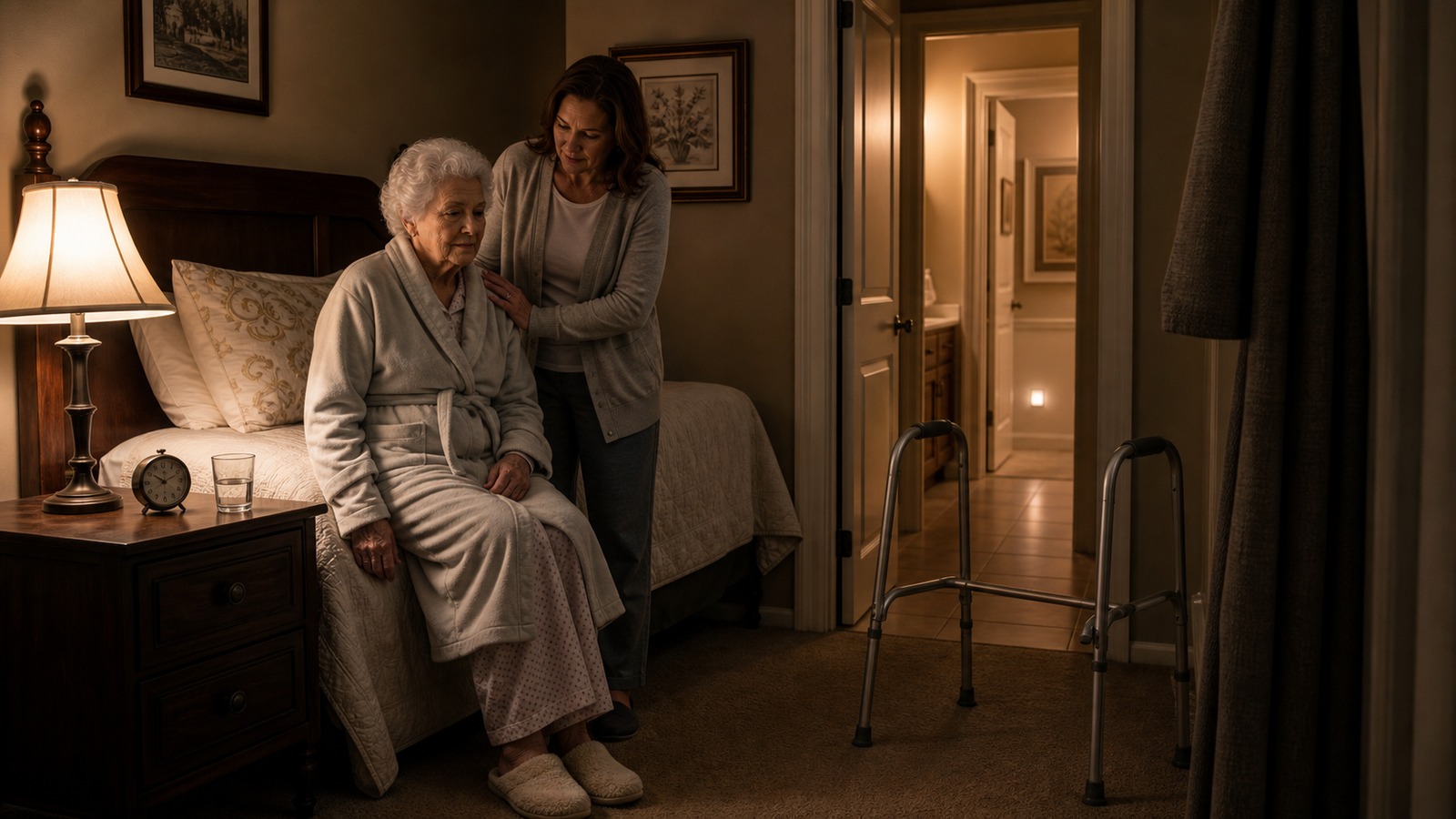

When a parent starts needing more help, many families begin with the same search: "nursing homes near me."
It is an understandable starting point. For decades, "nursing home" was the catch-all phrase for any place older adults moved when living alone stopped working. But in Texas today, a nursing home is a specific, medical level of care — and many older adults who need daily help do not need that level at all.
Choosing between a nursing home and assisted living is not about which one sounds nicer. It is about matching the setting to the actual care need. Get that match right, and your parent gets the support they need without paying for medical services they do not use. Get it wrong in either direction, and the family ends up moving twice.
This article explains how the two levels of care differ, who each one is designed for, and the questions that help families decide. It is not medical advice — the right level of care is a decision to make with your parent's physician — but it can help you walk into that conversation prepared.
The short answer
A nursing home (formally a skilled nursing facility) provides 24-hour nursing care for people with medical conditions that need ongoing clinical attention — wound care, injections, feeding tubes, ventilator support, or rehabilitation after a hospital stay.
An assisted living facility provides housing, meals, and hands-on help with daily activities — bathing, dressing, grooming, medication routines, and mobility — for people who need support through the day but do not need round-the-clock skilled nursing.
The simplest way to frame it: nursing homes are organized around medical treatment. Assisted living is organized around daily living.
What a nursing home actually provides
MedlinePlus describes nursing homes as places for people who do not need to be in a hospital but cannot be cared for at home. Most have licensed nurses available 24 hours a day and provide medical monitoring alongside personal care.
A nursing home is generally the right setting when an older adult needs:
- Daily skilled nursing care ordered by a physician.
- Complex wound care, injections, IV therapy, or tube feeding.
- Round-the-clock medical monitoring for unstable conditions.
- Intensive rehabilitation — physical, occupational, or speech therapy — often after a hospital stay.
- Care that a physician has determined exceeds what an assisted living setting can legally provide.
In Texas, nursing facilities are licensed by Texas Health and Human Services and are surveyed against both state and federal standards. Many stays are short-term: Medicare can cover skilled nursing care for a limited period after a qualifying hospital stay, which is why many families first encounter a nursing home during rehab after a fall, surgery, or illness.
What assisted living actually provides
MedlinePlus describes assisted living as housing for people who need help with daily care, but not as much help as a nursing home provides. Residents typically have their own room or apartment, share meals, and receive assistance built around their personal care plan.
Assisted living generally fits when an older adult needs:
- Help with bathing, dressing, grooming, or toileting.
- Support with medication routines.
- Regular, nutritious meals and hydration without managing a kitchen.
- A safer environment for mobility, with people nearby day and night.
- Daily companionship and structure instead of long hours alone.
Texas licenses assisted living facilities in two types. Texas Health and Human Services distinguishes Type A facilities, whose residents must be able to evacuate without staff assistance, from Type B facilities, which can serve residents who need staff assistance to evacuate, need overnight attendance, and require more hands-on daily support. If your parent needs meaningful physical assistance, the Type B license is the one to look for.
The differences that matter most
When families compare the two settings side by side, these are the differences that tend to drive the decision:
- Medical care. Nursing homes provide skilled nursing on site around the clock. Assisted living supports daily routines and observation; medical care still comes from the resident's own physicians and outside providers.
- Environment. Nursing homes are clinical by design. Assisted living is residential — especially small-home settings, where daily life looks like a household rather than a facility.
- Independence. Assisted living residents generally keep more control over their schedule, routines, and privacy.
- Cost. Because it includes 24-hour nursing, nursing home care generally costs substantially more than assisted living for a private room.
- How it is paid. Medicare covers qualifying short-term skilled nursing stays but does not pay for long-term custodial care in either setting. Long-term nursing home care is often paid by Medicaid for those who qualify. Assisted living is most often private pay, sometimes supported by long-term care insurance or VA benefits; Texas Medicaid waiver programs help in some situations. The National Institute on Aging's overview of residential care options is a good starting point for understanding what each setting includes.
Questions that point to the right level
Families can bring these questions to their parent's physician, a hospital discharge planner, or a care manager:
- Does my parent have a medical condition that requires daily attention from a licensed nurse?
- Is the current need mostly medical treatment, or mostly help with bathing, meals, medications, and safety?
- Is this a short-term rehab need after a hospital stay, or ongoing daily support?
- Could my parent's medical needs be met by visiting providers while daily care happens in a residential setting?
- If needs increase, how would the setting adapt — and at what point would a move be required?
A useful pattern: if the honest answer to "what does my parent need every single day?" is a nurse, look at nursing facilities. If the answer is a caring person — help getting dressed, regular meals, medication routines, someone nearby at night — assisted living is usually the better match.
The middle ground many families miss
Families sometimes assume the choice is between a large institution and staying home alone. But assisted living also comes in a small-home model: a licensed residence in a neighborhood, caring for a small number of residents with a high ratio of caregiver attention.
For older adults who need real daily support but not skilled nursing, a small Type B home can offer what families are actually searching for when they type "nursing homes near me" — someone present day and night, meals made, medications on schedule, and a caregiver who notices when something changes — in a setting that still feels like a home.
How A Place Called Home fits in
A Place Called Home is a licensed Type B assisted living facility in DeSoto, TX (Texas license 312833), built on the small-home model: a residential house, a small number of residents, and caregivers who know each person's routines.
We are not a nursing home, and we are honest with families about that distinction. When a family tours and their loved one's needs point to skilled nursing, we say so. When the need is daily personal care, meals, medication routines, and safe, attentive company, that is exactly what our home is designed to provide.
We serve families across DeSoto, Duncanville, Cedar Hill, Lancaster, Red Oak, Glenn Heights, and nearby southern Dallas County communities.
The bottom line
"Nursing home" and "assisted living" are not two names for the same thing. One is a medical setting; the other is a supported way of living. Start with your parent's actual daily needs, confirm the medical picture with their physician, and then tour the settings that match.
To go deeper, explore the services our caregivers provide, learn about our DeSoto assisted living home, or contact A Place Called Home — we are glad to help you think through the level of care your family needs, even if the right answer turns out not to be us.