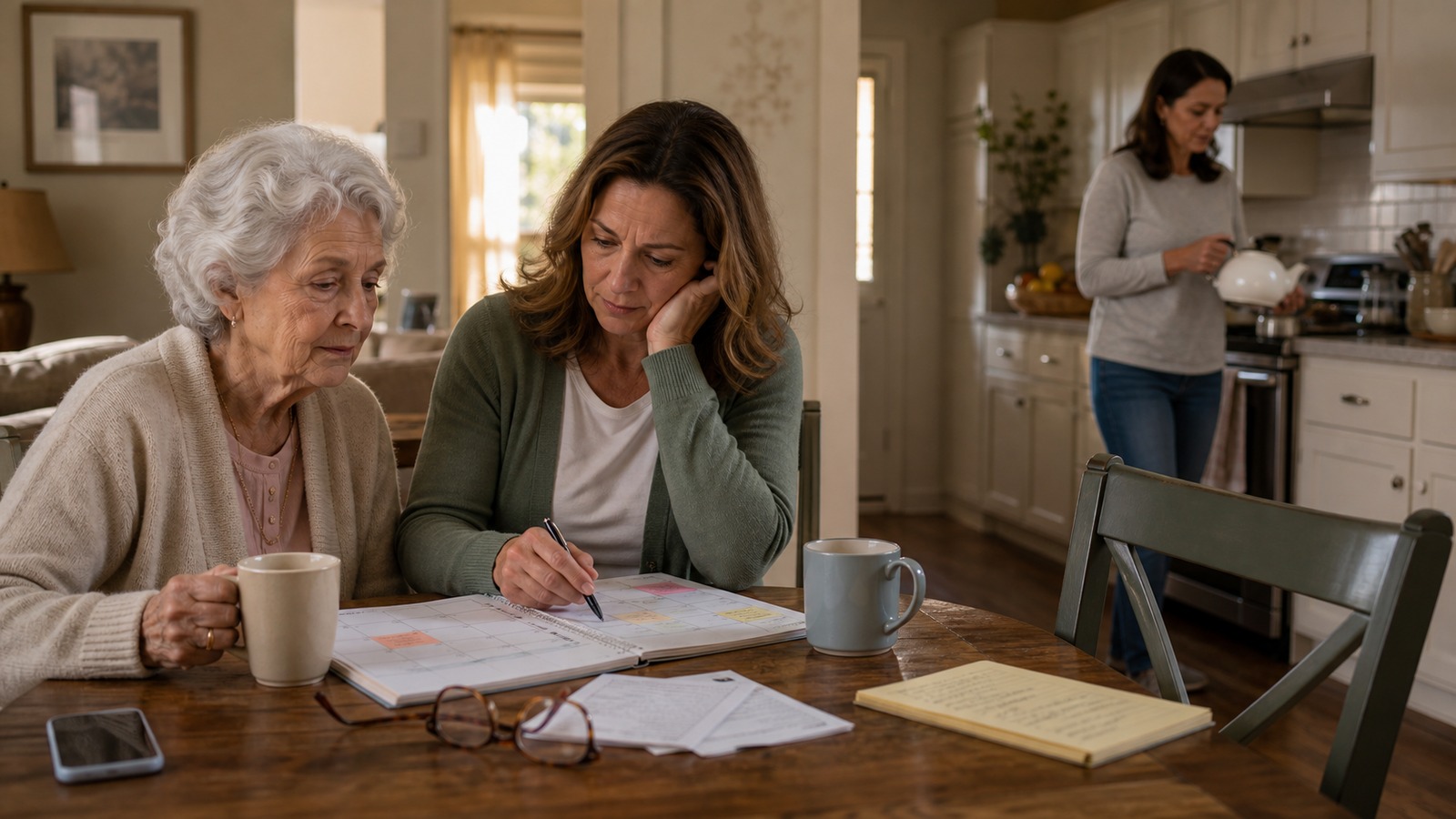
Not every family is ready for assisted living the first time concerns appear.
Mom may insist she is fine at home. Dad may not want to leave the house he built his life around. Adult children may see the risks, but they also understand the emotion behind staying put. Home is familiar. Home has memories. Home feels like control.
When families are not ready for assisted living, or when a loved one refuses to move, the next best step is not to pretend everything is fine. The next best step is to build a safer, more honest plan for home.
Home safety monitoring can be part of that plan. Medical alert buttons, fall detection devices, motion sensors, door alerts, medication reminder tools, stove shut-off devices, check-in apps, and smart home systems can help families see when something needs attention. But technology has limits. A device can send an alert. It cannot notice dignity, loneliness, fear, appetite, hygiene, or whether the person is slowly becoming overwhelmed by the day.
This article explains what home monitoring can help with, what it cannot do, and when families should reconsider whether home still has enough support.
First, be honest about what you are trying to solve
Families often buy devices after a scare. A fall happens. A burner is left on. A door is found unlocked. A parent misses several calls. The instinct is understandable: buy something that reduces the worry.
But before choosing any system, name the actual concern.
Are you worried about:
- Falls or near falls?
- Getting help quickly in an emergency?
- Medication routines?
- Cooking safety?
- Leaving the home at unsafe times?
- Long periods without movement?
- Missed meals or hydration?
- Loneliness and lack of daily connection?
- Family members living too far away to check in often?
Different problems need different supports. A fall alert does not fix missed meals. A camera does not create companionship. A medication reminder does not make the bathroom safer. A good home plan starts with the pattern, not the product.
What research and public health guidance support
Public health guidance consistently points families toward practical, layered support. The CDC's fall prevention guidance encourages older adults and families to talk with healthcare providers, review medicines, check vision and feet, stay active when appropriate, and make the home safer. That matters because fall prevention is not one device. It is a set of habits, health reviews, and environmental changes.
The FDA's medication safety guidance for older adults emphasizes keeping an updated medication list, following directions, understanding side effects, and involving healthcare professionals. That also points to a larger truth: reminders can help, but medication safety still depends on clear instructions, pharmacy communication, meals, hydration, and follow-through.
Research on smart home and sensor technologies for older adults generally suggests that monitoring tools may support aging in place by detecting activity patterns, emergencies, or changes in routine. The caution is that technology works best as part of a broader care plan. It is not a replacement for family involvement, professional guidance, or hands-on help when hands-on help is needed.
In simple terms: use monitoring to add visibility, not to convince yourself that no one needs to visit.
Types of home safety systems families often consider
There is no single right system for every family. The right choice depends on the person's risks, comfort with technology, budget, privacy preferences, and who will respond when something happens.
Medical alert buttons and fall detection
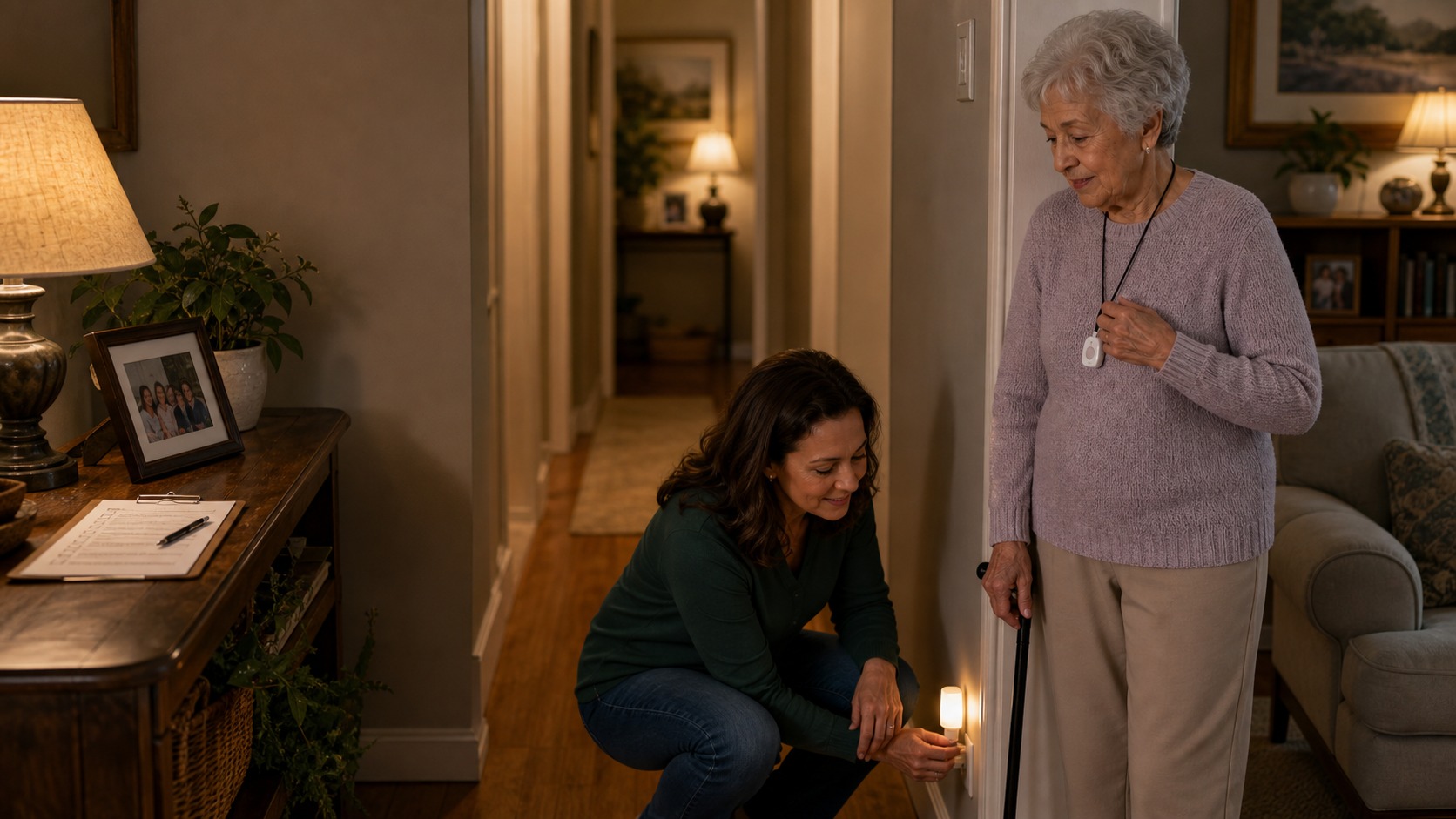
These systems can help an older adult call for help quickly. Some include automatic fall detection, although no fall detection system is perfect. Families should ask what happens after an alert, who is contacted, how fast the response is, and whether the loved one will actually wear the device.
A device sitting on a nightstand does not help during a fall in the hallway.
Motion and activity sensors
Motion sensors can show whether someone has moved around the home, opened the refrigerator, entered the bathroom, or followed a normal daily pattern. These can be less intrusive than cameras, which some families prefer.
The key is knowing what you will do with the information. If there is no movement by noon, who checks? If the refrigerator has not opened, who calls? If the bathroom is visited many times overnight, who talks with the doctor?
Medication reminder tools
Reminder devices, phone alarms, smart pill dispensers, and pharmacy packaging can support a medication routine. They can be especially helpful when the person understands the routine but forgets timing.
They are less helpful when the person is confused about what the medicine is for, takes old prescriptions, skips meals needed with medication, or cannot respond appropriately when something feels wrong. Medication questions should always involve the prescribing clinician or pharmacist.
Cooking and stove safety devices
Stove shut-off tools, smoke detectors, carbon monoxide alarms, and appliance monitoring can reduce certain home risks. These are worth considering when cooking is still appropriate but forgetfulness or distraction has become a concern.
If the loved one is regularly burning food, forgetting the stove, or unable to prepare meals safely, the issue may no longer be the stove alone. It may be a sign that meal support is needed.
Door alerts and location tools
Door sensors, locks, and location devices may be considered when a person is at risk of leaving the home unsafely. This is a sensitive area. Families should involve healthcare professionals when memory changes, wandering, or disorientation are present.
Safety matters, but dignity and privacy matter too. The plan should be discussed as openly as possible with the older adult and care team.
Video cameras
Cameras can give family members visibility, but they raise serious privacy questions. Not every older adult is comfortable being watched at home. Cameras in private spaces such as bedrooms and bathrooms are not appropriate.
If cameras are used, families should be clear about where they are placed, who can view them, when they are checked, and why they are needed. In many homes, motion sensors, scheduled calls, and in-person visits may feel more respectful than video monitoring.
The most important part: who responds?
A monitoring system is only as strong as the response plan behind it.
If an alert goes off, who answers? If the adult child is in a meeting, who is backup? If the neighbor is out of town, who goes to the home? If the loved one does not answer the phone, how long do you wait? If emergency services are called, who meets them? If this happens three times in one month, what changes?
Families should write the response plan down. Keep it simple and specific.
- Primary contact.
- Backup contact.
- Neighbor or nearby family contact, if available.
- Doctor and pharmacy information.
- Medication list location.
- Emergency access plan for the home.
- Clear rules for when to call 911.
- Clear rules for when the care plan must be reconsidered.
Technology can create an alert. People still have to respond.
Do not let monitoring replace visits
This is one of the biggest mistakes families can make. A dashboard can show movement. It cannot smell spoiled food, see a new bruise clearly, notice that clothes are not being washed, feel the mood in the room, or understand whether the person is lonely.
Home safety monitoring should support human connection, not reduce it.
Families should keep regular check-ins:
- Phone or video calls at predictable times.
- In-person visits when possible.
- Meal checks.
- Medication list reviews with healthcare professionals.
- Home safety walk-throughs.
- Conversations about loneliness, fear, and daily confidence.
If the only reason a person appears safe is because a device has not alerted yet, that is not enough information.
What a basic home safety plan can include
For families who are not ready for assisted living, a practical plan might include several layers.
Start with the home environment:
- Remove loose rugs and clutter from walking paths.
- Improve lighting in bedrooms, bathrooms, hallways, and entry areas.
- Add grab bars where appropriate.
- Keep frequently used items within easy reach.
- Check smoke and carbon monoxide detectors.
- Review bathroom safety and nighttime bathroom trips.
Then add routine support:
- Scheduled family calls.
- Meal delivery or family-prepared meals when needed.
- Medication review with a pharmacist or clinician.
- Transportation support for appointments and groceries.
- Regular social contact.
- A written emergency plan.
Then consider monitoring tools that fit the actual risks:
- Medical alert device for emergency help.
- Fall detection if falls or near falls are a concern.
- Motion sensors if daily activity patterns are unclear.
- Medication reminders if timing is the issue.
- Stove shut-off tools if cooking safety is a concern.
- Door alerts if leaving home unsafely is a concern.
The best plan is layered. It does not depend on one device to solve everything.
When monitoring may not be enough
Home monitoring can be helpful, but families should be honest about its limits.
It may be time to reconsider assisted living or another higher level of support if:
- Falls or near falls keep happening.
- Your loved one does not remember how to use the alert system.
- Meals, hydration, bathing, or medication routines remain inconsistent.
- Alerts are frequent and family cannot respond reliably.
- The person is isolated most of the day.
- There is confusion, wandering, unsafe cooking, or repeated emergency calls.
- Family members are constantly worried even with monitoring in place.
- The home plan only works because one caregiver is exhausted.
Monitoring can tell you something happened. Assisted living can provide more daily structure, observation, meals, reminders, personal care support, and human presence. The right option depends on the person's needs, safety, preferences, and the family's ability to respond.
How to talk about monitoring without making your loved one feel watched
Many older adults resist monitoring because it feels like a loss of privacy. Families should take that seriously. The goal should be support, not surveillance.
Try saying:
"We know you want to stay home. We want to support that as safely as possible. Can we talk about a few tools that would help us respond faster if something happens?"
That sounds different from, "We need to watch you because you are not safe."
Whenever possible, involve the older adult in choosing the system. Ask what feels acceptable. A wearable button may feel better than cameras. A daily call may feel better than a sensor. A neighbor check-in may feel better than an app. Respect increases cooperation.
How A Place Called Home fits into this conversation
A Place Called Home understands that families do not always move straight from concern to assisted living. Sometimes the first step is a safer home plan. Sometimes families need time. Sometimes a loved one needs to try more support at home before they are ready to talk about moving.
Our role is to help families think clearly about care. Our licensed DeSoto assisted living home is intentionally small, calm, and personal. For the right resident, that can provide the daily support that home monitoring cannot: familiar caregivers, regular meals, help with routines, observation of changes, and a setting where a person is known.
Families in DeSoto, Duncanville, Cedar Hill, Lancaster, Red Oak, and nearby communities may use home monitoring as a bridge.
If your family is trying to decide whether home is still enough, you do not have to wait for a crisis to ask questions. A conversation can help you compare the current home plan with the support your loved one may actually need.
The bottom line
Home safety monitoring can be a useful bridge when an older adult is not ready for assisted living. It can help families respond faster, notice patterns, and support aging in place for a time.
But technology is not care by itself. A strong plan still needs home safety changes, healthcare guidance, family involvement, privacy respect, social connection, and a clear point where everyone agrees to reconsider the next level of support.
The goal is not to rush someone out of their home. The goal is to be honest about whether home still has enough help around it.
To learn more, visit our services, read about our DeSoto assisted living home, or contact A Place Called Home to talk through your family's needs.