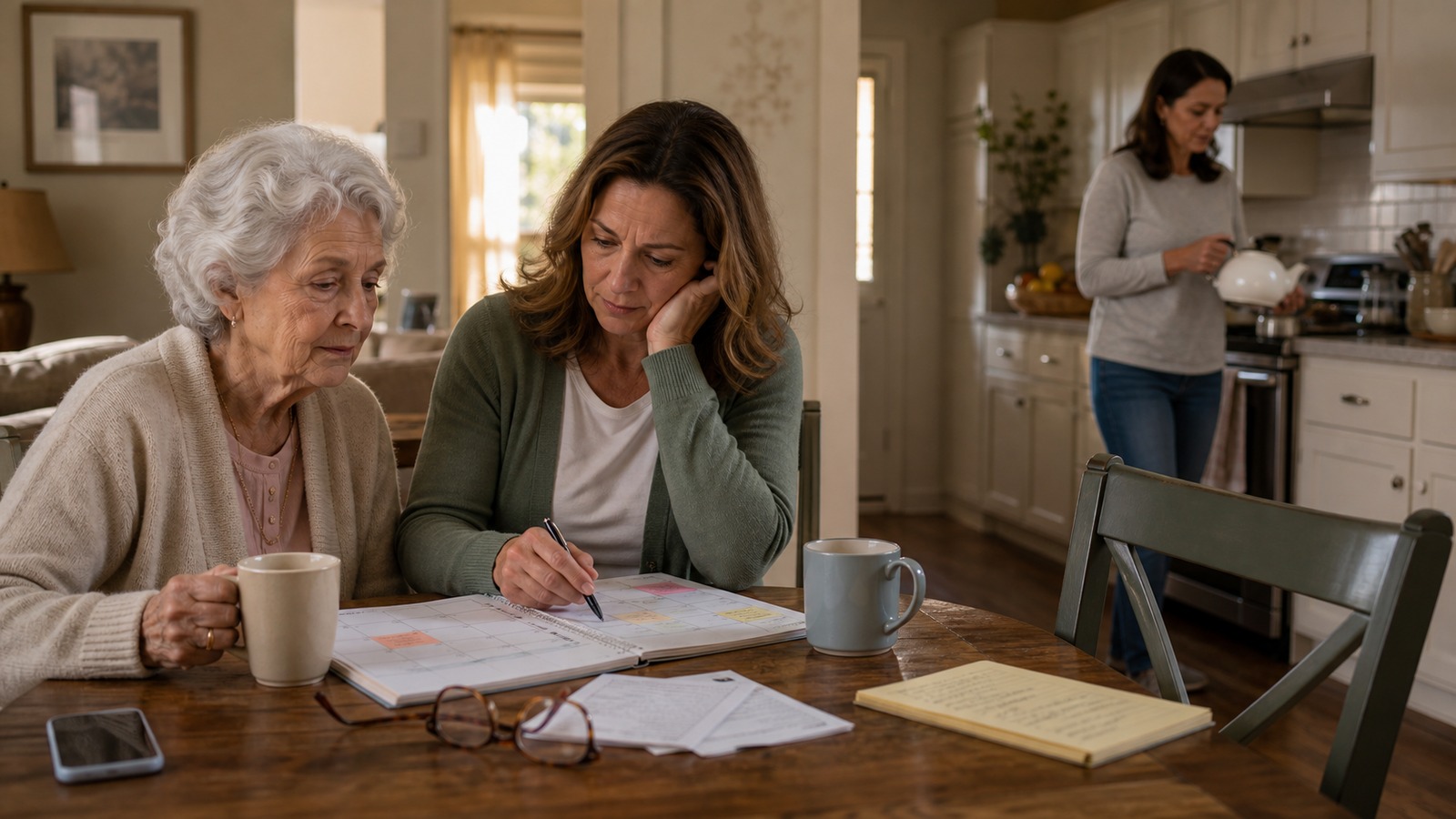

Families often notice medication problems in small, ordinary moments.
A pill organizer is still full on Friday. A bottle has two different refill dates. The pharmacy calls about a prescription that was not picked up. Mom says she already took her medicine, but she cannot remember when. Dad keeps every bottle in a kitchen drawer, including old prescriptions that should no longer be used. Nobody is calling it a crisis yet, but the family can feel that something is becoming harder.
Medication routines are one of the clearest signs that an older adult may need more daily support. Not because every medication issue means assisted living is needed, but because medication routines depend on memory, vision, hand strength, transportation, meals, hydration, sleep, doctor visits, pharmacy refills, and the ability to follow a plan consistently.
When those pieces start slipping, families should pay attention. The pill bottles may be telling a bigger story about daily life.
Why medication routines can become harder with age
Many older adults take more than one medication. Some take prescriptions from several doctors. Others take over-the-counter medicines, vitamins, supplements, eye drops, inhalers, creams, or pain relievers in addition to prescription medicine. Even when each item has a good reason, the routine can become complicated.
The U.S. Food and Drug Administration encourages older adults to keep a medication list, follow directions carefully, understand side effects, and talk with healthcare professionals before making changes. That guidance is practical, but it also shows why medication routines require real attention.
It is not always enough to ask, "Are you taking your medicine?" A person may be trying their best and still feel confused by timing, refills, labels, food instructions, side effects, or a new prescription after a hospital visit. For adult children, the question becomes more specific: does my loved one have enough support to follow the plan safely and consistently?
Medication safety is a real public health concern
The Centers for Disease Control and Prevention describes adverse drug events as harms that can happen from medication use and notes that these events lead to many emergency department visits each year. Older adults can be especially vulnerable because they are more likely to take multiple medications and may have changing health needs.
This does not mean medication should be feared. Medicines can be essential, helpful, and life sustaining. The concern is not medicine itself. The concern is whether the routine around medicine is still working.
That distinction matters. A physician or pharmacist decides what medication is appropriate. A family or care setting helps notice whether the day-to-day routine is becoming too difficult to manage alone.
What families should look for at home
Medication concerns often leave clues around the house. Families should look respectfully and avoid turning the conversation into blame. Many older adults feel embarrassed when a routine that used to be simple starts feeling confusing.
Pay attention to signs such as:
- Pill organizers that are not being filled or are still full after several days.
- Multiple bottles of the same medicine in different places.
- Expired prescriptions or old medications kept with current ones.
- Missed refills or pharmacy calls that go unanswered.
- Confusion about morning, evening, food, or bedtime instructions.
- Difficulty opening bottles, reading labels, or cutting tablets.
- Taking medicine without enough food or water when instructions require it.
- New dizziness, sleepiness, stomach upset, confusion, or changes in balance.
- Medication schedules that fall apart when meals are skipped.
- A loved one saying, "I am fine," but becoming defensive when asked for details.
These signs do not prove that someone is unsafe. They do mean the routine deserves a closer look. Families should contact the prescribing clinician, pharmacist, or another qualified healthcare professional when there are questions about dose, timing, side effects, interactions, missed doses, or whether a medication should still be used.
The routine is bigger than the bottle
Medication routines are connected to the rest of the day. A person may need to take one medicine with breakfast, another in the evening, another only as needed, and another with special instructions. If breakfast becomes inconsistent, if transportation to the pharmacy becomes difficult, or if memory changes make time feel less clear, the medication routine can become fragile.
Families often discover that the real issue is not one missed pill. The real issue is that home life now depends on many small tasks happening correctly every day.
That can include:
- Knowing what each medication is for.
- Following the schedule set by the doctor or pharmacist.
- Keeping an updated medication list.
- Refilling prescriptions before they run out.
- Taking medicine with meals or fluids when directed.
- Not mixing current prescriptions with old bottles.
- Communicating when a new symptom appears.
- Bringing accurate medication information to appointments.
For a healthy younger person, that may sound manageable. For an older adult with memory changes, low vision, arthritis, fatigue, loneliness, poor appetite, or limited transportation, it can become a lot.
Why "I already took it" may not be enough
Adult children often hear short answers because their parent wants to remain independent. That desire deserves respect. Independence matters. But independence should not depend on guesswork.
If a loved one says, "I already took it," the next question is not meant to challenge them. It is meant to understand the routine. Which medicine did they take? Was it today or yesterday? Was it with food? Is the pill organizer accurate? Did the pharmacy change the bottle color or label? Did a doctor stop one medication and start another?
A calm, specific conversation can reveal whether the person is managing well or only appearing to manage well. The goal is not to take control away. The goal is to make sure the support matches the reality of daily life.
The difference between medical decisions and daily support
This distinction is important for families and for care providers.
Medication decisions belong with physicians, pharmacists, nurse practitioners, and other qualified healthcare professionals. They decide what a person should take, why they should take it, how much they should take, whether medicines interact, and what side effects should be watched closely.
Daily support is different. Daily support is about the ordinary structure around the plan: reminders, routines, meals, hydration, observation, communication, and helping the family notice when something has changed. In assisted living, the exact type of medication support depends on the resident's care plan, provider orders, facility policies, and state rules.
A good assisted living conversation should never sound like, "We replace your doctor." It should sound more like, "We help support the daily routine your doctor and pharmacist have already set, and we communicate concerns when the routine is not working."
How assisted living can help with medication routines
Assisted living cannot remove every medication concern. It cannot guarantee that an older adult will never miss a dose, have a side effect, or need a medication change. No honest care setting should promise that.
What assisted living can provide is a more supported daily rhythm. In the right setting, caregivers can help residents stay closer to the routines that support the overall care plan. They can notice whether a resident is eating less, drinking less, sleeping more, appearing dizzy, becoming confused, avoiding meals, or struggling with a schedule that used to be manageable.
Depending on the care plan and applicable rules, assisted living support may include:
- Medication reminders or routine support.
- Observation when a resident seems different from their normal pattern.
- Communication with family when there are concerns.
- Support around meals and hydration that may relate to medication timing.
- Help keeping daily routines more consistent.
- Coordination with family and healthcare professionals when questions arise.
For many families, the value is not only the reminder. The value is that someone is present enough to notice when the routine is becoming harder.
Why small residential assisted living can feel different
Medication routines are personal. One resident may need a quiet morning routine. Another may need encouragement to eat breakfast before following a medication schedule. Another may become anxious when a label changes. Another may be able to explain everything clearly but still forget refills.
In a smaller residential assisted living home, caregivers may have more opportunity to learn the person's normal rhythm. That can make changes easier to notice. If someone who is usually alert seems unusually sleepy, if appetite drops, if a resident becomes less steady after a medication change, or if family members are concerned after an appointment, those details matter.
A smaller home does not replace clinical care. It is not the right fit for every level of medical need. But for families who want a calm setting, familiar caregivers, and personal daily attention, the small-home model can make support feel more human and less institutional.
Questions families can ask
If medication routines are becoming a concern, ask specific questions. General questions often lead to quick answers.
Try asking:
- Can we look at your current medication list together?
- Which medicines do you take in the morning?
- Which ones do you take with food?
- Do any labels look confusing?
- Are any bottles hard to open or hard to read?
- Has anything changed since your last doctor visit?
- Do you ever skip a dose because you are not sure what to do?
- Are refills being picked up on time?
- Do you ever feel dizzy, sleepy, weak, or different after taking medicine?
- Would it help to have more daily support around routines?
These questions should be asked gently. Medication concerns can feel private, and many older adults worry that admitting confusion will lead to losing control. Families should make the conversation about support, not criticism.
When medication routines point to a bigger care conversation
It may be time to talk about more daily support when medication concerns are part of a larger pattern.
Consider a deeper care conversation if:
- Medication mistakes are happening more than once.
- Refills are often late or missed.
- Your loved one cannot explain the current routine clearly.
- Old and current medications are mixed together.
- Meals, hydration, or sleep are also becoming inconsistent.
- There are falls, dizziness, confusion, or sudden changes in daily behavior.
- Family members are managing the routine from a distance and still feel uneasy.
- Your loved one needs reminders but does not have reliable daily help.
Assisted living is not only a response to a crisis. It can also be a way to support daily routines before the situation becomes more fragile. The right support can help an older adult keep more dignity, structure, and connection in everyday life.
How A Place Called Home thinks about daily support
A Place Called Home was created for families who want senior care to feel personal, calm, and familiar. Our licensed DeSoto assisted living home is intentionally small, which helps caregivers learn each resident's routines, preferences, and normal daily patterns.
That matters with medication routines because small changes can matter. Is someone eating less? Sleeping more? Avoiding breakfast? Becoming confused about time? Having trouble with daily tasks that used to feel simple? In a smaller home setting, those details can be easier to notice and communicate.
Families in DeSoto, Duncanville, Cedar Hill, Lancaster, Red Oak, and nearby communities may reach a point where managing medication routines at home no longer feels steady enough.
If pill bottles, refill timing, meals, or daily routines are becoming harder to manage, it may be time to talk through what support would actually help.
The bottom line
Medication routines can reveal a lot about how an older adult is really doing at home. A missed dose may be a one-time mistake. A pattern of confusion, missed refills, skipped meals, old bottles, and family worry may mean daily life needs more support.
The best response is calm and practical: involve healthcare professionals, keep an updated medication list, ask specific questions, look at the daily routine, and be honest about whether your loved one has enough help.
This article is educational and is not medical advice. Never start, stop, or change medication without talking with the prescribing clinician or pharmacist.
To learn more, visit our services, read about our DeSoto assisted living home, or contact A Place Called Home to talk through your family's needs.