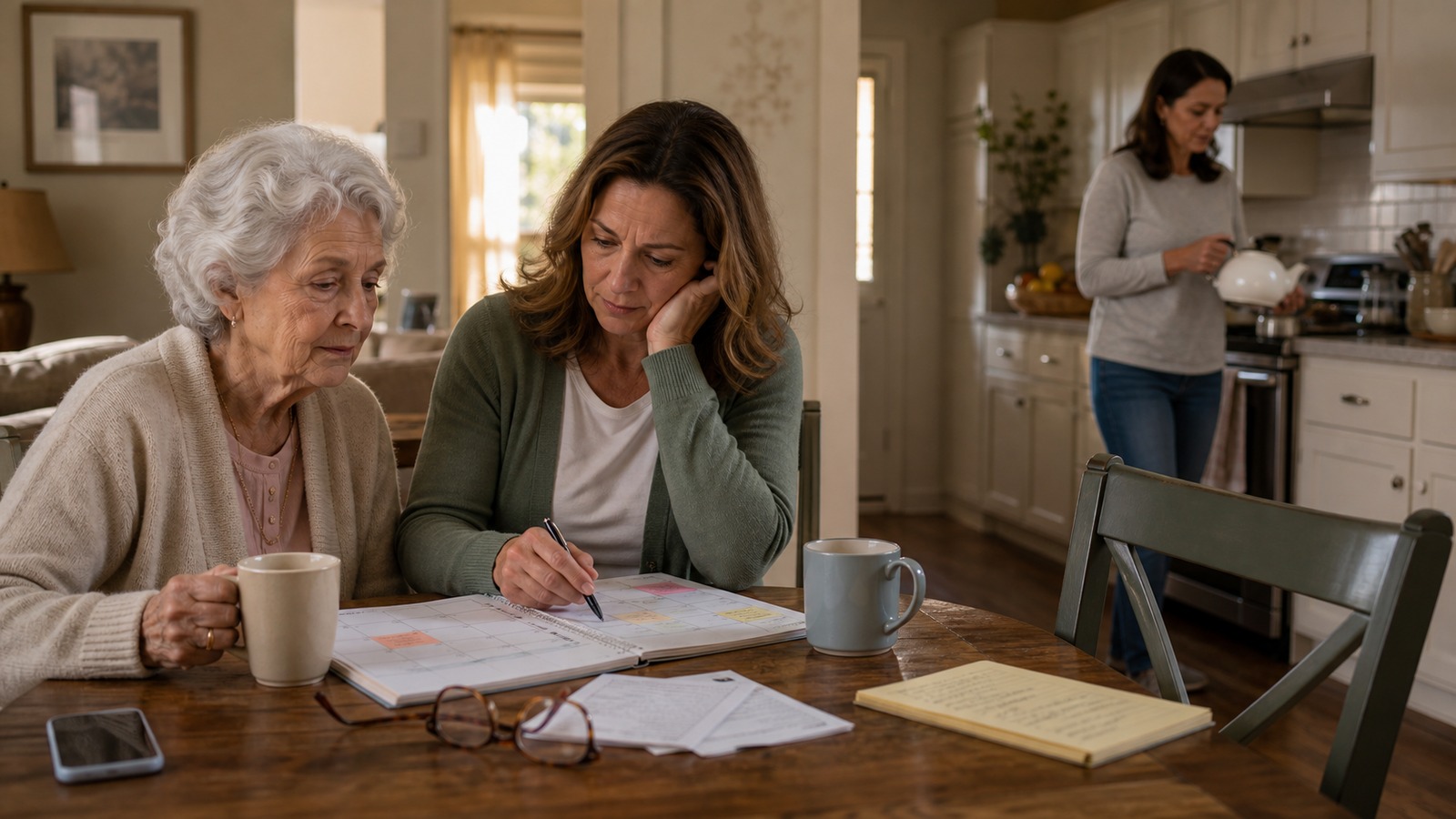

Most families do not make senior care decisions all at once. They notice small things first.
Mom is eating less. Dad stopped going to church. A pill organizer is confusing. Laundry is piling up. There are new bruises, but no clear explanation. The house still looks familiar, but the daily rhythm feels less steady. Everyone hopes it is temporary. Sometimes it is. Sometimes it is the beginning of a larger care conversation.
The hard part is knowing what to do next. Families want to protect safety without taking away dignity. They want to respect independence without ignoring risk. They want to help, but they do not want every conversation to turn into an argument.
This guide is built around practical do's and don'ts. It is not a checklist for forcing a decision. It is a way to look at senior care with more clarity, more kindness, and better questions.
Do look for patterns, not just one bad day
Everyone has off days. A missed meal, a messy kitchen, or a forgotten appointment does not automatically mean an older adult needs assisted living. The concern is when small issues begin repeating.
Look for patterns across daily life:
- Meals are becoming inconsistent.
- Medication routines are harder to track.
- Falls, near falls, or balance concerns are happening more often.
- Bathing, dressing, laundry, or housekeeping are being avoided.
- Your loved one is spending more time alone and less time engaged.
- Family members are checking in more often but still feel uneasy.
Patterns matter because senior care is about daily life, not just emergencies. A person may sound fine on the phone and still be struggling with meals, hygiene, hydration, movement, or organization at home.
Don't wait for a crisis to ask questions
Many families wait until a fall, hospitalization, medication mistake, or caregiver burnout forces a decision. That is understandable, but it often makes the conversation more stressful.
The CDC's fall prevention guidance emphasizes practical steps such as talking with a healthcare provider, reviewing medicines, checking vision and feet, and making the home safer. Those steps are easier to take before a major crisis, not after everyone is exhausted.
Early conversations do not have to mean an immediate move. They can mean asking better questions, touring care options, reviewing the home setup, talking with a physician, and understanding what support might be needed later.
Waiting can feel respectful, but silence can also leave an older adult carrying more than they can manage.
Do include your loved one in the conversation
Senior care should not feel like a decision being made behind someone's back. Even when family members are worried, the older adult deserves to be heard.
Ask what matters most to them. Is it privacy? Familiar meals? A quiet room? Faith routines? Staying near family? Having help without feeling watched? Being treated like an adult? These answers matter because the right care setting should support the person, not only solve a task list.
A better conversation sounds like this: "We want to understand what feels harder right now and what kind of support would help you feel steady." That is different from saying, "You cannot live alone anymore."
Don't make senior care only about age
Age alone does not tell the whole story. Some people in their 90s have strong routines, good support, and a safe home setup. Some people in their 70s need help because of memory changes, mobility issues, medication complexity, loneliness, or chronic health needs.
Care decisions should be based on function and support, not birthdays. What can the person safely and consistently do each day? What is becoming harder? Who is available to help? What happens when family is not there?
At A Place Called Home, we often say assisted living is not only about age. It is about needing the right support.
Do take social connection seriously
Loneliness is not just an emotional issue. The CDC notes that social connection is tied to health and well-being. Research and public health guidance increasingly recognize that isolation can affect older adults in serious ways.
This matters because many families focus only on whether an older adult can complete tasks. Can they eat? Can they bathe? Can they take medicine? Those questions matter, but they are not the whole picture.
Also ask:
- Who does my loved one talk to most days?
- Are meals usually eaten alone?
- Has interest in hobbies, faith, friends, or family changed?
- Does the house feel quiet in a way that is peaceful, or quiet in a way that is isolating?
- Is my loved one withdrawing because leaving home feels difficult?
A small residential care setting can help some older adults regain a daily rhythm of meals, conversation, and familiar faces. It is not about forcing constant activity. It is about making sure a person is still known, noticed, and connected.
Don't confuse independence with doing everything alone
Many older adults say, "I do not want to lose my independence." Families should take that seriously. Independence matters deeply.
But independence does not have to mean doing every task without help. Sometimes the right support protects independence. Help with meals, bathing, reminders, laundry, transportation, or daily routines may allow a person to spend energy on what still gives life meaning.
A person who accepts help before a crisis may keep more choice than someone who waits until an emergency removes options.
Do ask specific daily-life questions
General questions often get general answers. "Are you okay?" usually leads to "I'm fine." More specific questions give families better information.
Try asking:
- What did you eat today?
- Do you feel safe getting in and out of the shower?
- Have you felt dizzy or unsteady recently?
- Are you keeping up with laundry and clean clothes?
- Which appointments are coming up?
- Is anything about your routine starting to feel tiring?
- Do you still enjoy being home alone most of the day?
- Would a little more help make the day feel easier?
The goal is not interrogation. The goal is understanding the real day, not the version everyone wishes were still true.
Don't choose care based only on a beautiful building
A nice building can be comforting, but care quality is not measured only by furniture, lobby size, or landscaping. Families should pay attention to the daily experience.
Ask about:
- How caregivers get to know each resident's routines.
- How changes in appetite, mood, movement, or behavior are noticed.
- What daily support looks like with meals, bathing, dressing, and reminders.
- How families are updated when something changes.
- Whether the setting feels calm enough for the resident's personality.
- Whether the care team can support the resident's current needs safely.
MedlinePlus describes assisted living as housing for people who need help with daily care but do not need the level of medical care provided in a nursing home. That distinction is important. The right setting depends on the person's needs, the facility's capabilities, and whether daily support can be provided safely and consistently.
Do involve healthcare professionals
Families should not carry every decision alone. Physicians, pharmacists, therapists, social workers, and other qualified professionals can help clarify what is medical, what is functional, and what kind of support may be appropriate.
The Agency for Healthcare Research and Quality encourages patients and families to ask questions and be active participants in healthcare. That advice applies strongly to senior care decisions.
Before and after appointments, families can ask:
- What changes should we be watching for?
- Could any medication be affecting balance, appetite, sleep, or alertness?
- Would physical therapy, occupational therapy, or home safety changes help?
- What level of daily support would be reasonable?
- When should we consider a more supported living setting?
Good care decisions are usually made with better information, not more fear.
Don't ignore caregiver strain
Adult children often underestimate how much they are doing. They manage appointments, refills, groceries, bills, transportation, emotional support, home repairs, and late-night worries. They may still say, "It is not that bad."
Caregiver strain matters because family support is part of the care plan. If the family system is stretched too thin, the older adult may also be at risk of inconsistent support.
It is not selfish to admit that the current arrangement is too much. It is responsible. A care plan that only works when one daughter never rests, one son leaves work early every week, or one spouse handles everything alone may not be sustainable.
Do tour before everyone is exhausted
Touring an assisted living home does not mean you have made a final decision. It means you are gathering information.
Touring early gives families a chance to compare settings calmly. You can ask questions, see the environment, understand pricing, learn what services are included, and think about fit. Waiting until discharge papers are in hand or a crisis has already happened can make the decision feel rushed.
When touring, pay attention to how the place feels. Does it feel rushed or calm? Do residents seem known by name? Are staff able to explain daily routines clearly? Would your loved one feel seen here?
Don't promise that nothing will ever change
Families sometimes promise, "You will never have to leave home." The promise usually comes from love, but it can become painful if needs change.
A better promise is more honest: "We will keep listening. We will look at your needs carefully. We will try to choose support that protects your dignity and safety."
That leaves room for reality. The goal is not to force a move. The goal is to respond when the current situation no longer supports the person's well-being.
Do think about the right size of care
Some older adults do well in larger communities with many activities and amenities. Others feel overwhelmed by large campuses, long hallways, busy dining rooms, or constantly changing faces.
A smaller residential assisted living home can be a better fit for families who want a quieter environment, familiar caregivers, shorter walking distances, and more personal daily attention. The right choice depends on care needs, personality, preferences, safety, and available support.
Small does not automatically mean better for everyone. But for the right resident, a small home can make care feel more personal and less institutional.
How A Place Called Home approaches senior care
A Place Called Home was created for families who want care that feels personal, calm, and familiar. Our licensed DeSoto assisted living home is intentionally small, which helps caregivers learn each resident's routines, preferences, and normal daily patterns.
That matters because senior care is often about small details. Is someone eating less? Moving differently? Withdrawing from conversation? Needing more help with bathing? Feeling unsure about routines that used to feel easy? In a smaller home setting, those changes can be easier to notice and communicate.
Families in DeSoto, Duncanville, Cedar Hill, Lancaster, Red Oak, and nearby communities may reach a point where living alone no longer feels steady enough.
We believe the best care conversations are honest, respectful, and practical. They begin with the person, not just the problem.
The bottom line
Senior care decisions are not about taking over. They are about noticing when daily life needs more support and responding before a crisis takes away choice.
Do look for patterns. Do ask specific questions. Do involve healthcare professionals. Do take social connection seriously. Don't wait until everyone is exhausted. Don't choose care based only on appearances. Don't treat independence as something that disappears the moment help is accepted.
The right support should help an older adult feel safer, more known, and more steady in daily life.
To learn more, visit our services, read about our DeSoto assisted living home, or contact A Place Called Home to talk through your family's needs.