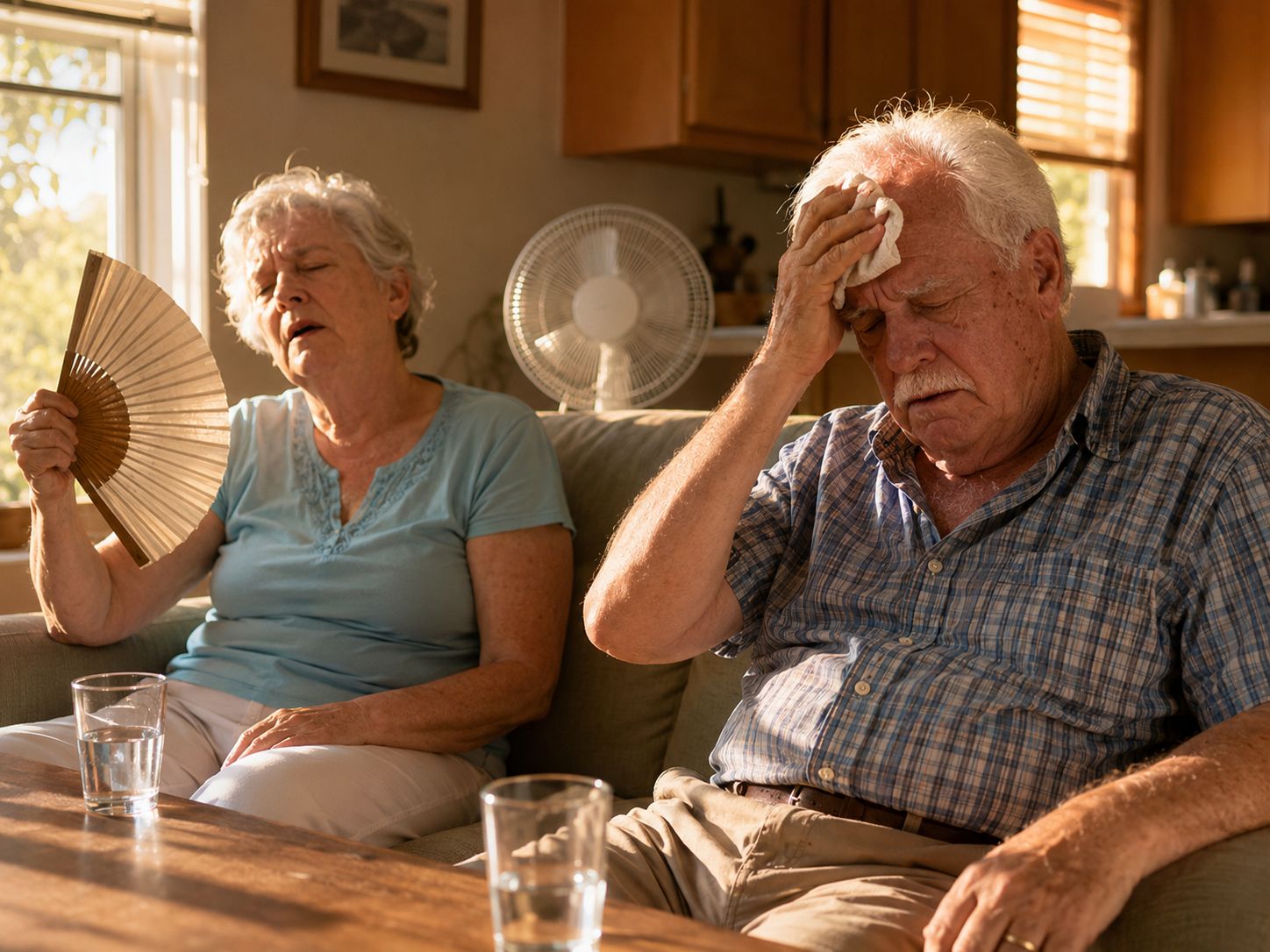
In Texas, heat is easy to underestimate because it is familiar. Families expect hot afternoons, warm evenings, and long summers. But for older adults, especially seniors who live alone or have chronic health conditions, hot weather can become more than a seasonal inconvenience. It can become a safety issue.
A parent may say, "I am fine." The air conditioner may be running. There may be water in the refrigerator. From the outside, everything can look normal. Inside the home, though, small risks can build quietly. Someone may not feel thirsty. They may avoid drinking water because getting to the bathroom feels difficult. They may skip meals because cooking heats up the kitchen. They may take medications that affect sweating, hydration, blood pressure, or body temperature. They may not notice how warm the house has become until they are already weak, dizzy, or confused.
This is why families should think about heat safety before the first real emergency. Summer can reveal whether an older adult has enough support for ordinary daily life.
Why older adults are more vulnerable to heat
The CDC explains that adults age 65 and older are more prone to heat-related health problems. There are several reasons. Older adults may not adjust as quickly to sudden temperature changes. Chronic medical conditions can affect how the body responds to heat. Some prescription medications can interfere with the body's ability to control temperature, sweat, or stay hydrated.
The National Institute on Aging, part of the NIH, also notes that summer heat can lead to serious heat-related illnesses in older adults, including heat exhaustion and heat stroke. Risk can rise with heart, lung, or kidney disease, high blood pressure, dehydration, certain medications, and very hot living quarters.
That does not mean every older adult is unsafe in hot weather. Many seniors manage summer well with good hydration, reliable cooling, regular meals, transportation, social support, and a clear plan. The concern is when those supports are inconsistent or when a loved one is expected to manage everything alone.
Heat safety is not only about temperature
Families often think heat safety means asking one question: does Mom have air conditioning?
That question matters, but it is not enough. Heat risk is usually a combination of environment, health, routine, judgment, and support. A house may have air conditioning, but the thermostat may be set too high to save money. The system may fail without anyone noticing quickly. A senior may sit in one warm room for hours. They may not drink enough water. They may not recognize early symptoms of heat stress. They may be afraid to ask for help because they do not want to worry their children.
Texas Ready, a state emergency preparedness resource, warns that extreme heat can create serious health problems and notes that older adults, people with health conditions, and people without access to air conditioning or hydration are among those most severely affected.
For families, the practical question is this: if the day becomes dangerously hot, who will notice whether your loved one is actually safe?
The signs families should take seriously
Heat-related problems do not always begin dramatically. Sometimes the first signs look like ordinary aging, fatigue, or "just having an off day."
Pay attention to patterns such as:
- New weakness, dizziness, headache, nausea, or muscle cramps.
- More confusion than usual, especially in the afternoon or evening.
- Less appetite or skipped meals during hot days.
- Very little water intake or signs of dehydration.
- Dark urine, dry mouth, unusual sleepiness, or low energy.
- A warmer-than-expected home, closed rooms, or poor airflow.
- Fear of bathing or showering even when cooling down would help.
- Medication routines becoming inconsistent.
- Fewer calls, fewer outings, or less interest in normal routines.
Heat stroke is an emergency. If someone has very high body temperature, fainting, severe confusion, behavior changes, hot flushed skin, or other serious symptoms, families should call 911 or seek emergency medical help right away.
This article is not medical advice. Families should talk with a physician, pharmacist, or other qualified medical professional about individual risks, especially when a loved one has chronic conditions or takes multiple medications.
Medications can change the heat-safety picture
Medication routines matter all year, but hot weather can make them even more important. The CDC has clinical guidance explaining that some medications can increase the risk of heat-related illness by affecting hydration, sweating, kidney function, blood pressure, alertness, or body temperature regulation.
This does not mean families should stop or change medications on their own. They should not. It does mean hot weather is a good time to ask better questions:
- Does this medication affect hydration or sweating?
- Should fluid intake be adjusted during hot weather?
- Are there warning signs we should watch for during heat waves?
- What should we do if appetite or water intake drops?
- Who should be called first if Mom seems weak, confused, or unusually tired?
A pharmacist or physician can help families understand medication-related heat risk. The larger care question is whether the person has enough daily support to follow the plan consistently.
Why living alone can make hot days harder
Living alone is not automatically unsafe. Many older adults live alone and stay active, connected, and well supported. But hot weather can expose weak spots in a support system.
If a senior lives alone, someone needs to know the answers to basic questions:
- Is the air conditioning working today?
- Is the home staying cool enough in the afternoon?
- Is there enough water nearby, and is the person actually drinking it?
- Are meals still happening?
- Is the person taking medications correctly?
- Can they bathe safely, dress lightly, and rest when needed?
- If something changes, who will notice?
The CDC recommends checking on older adults during hot weather and paying attention to water intake, access to air conditioning, cooling knowledge, and signs of heat stress. For family caregivers, this can be difficult when they are working, raising children, living across town, or trying to monitor several needs at once.
That is the point at which heat safety becomes part of a larger care conversation. The issue is not only summer weather. The issue is whether daily life has become too fragile without consistent support.
Practical heat-safety steps for families
Before peak summer heat, families can make a simple plan. It does not need to be complicated. It needs to be realistic.
Start with the home:
- Check the air conditioning before the hottest weeks arrive.
- Make sure the thermostat is easy to use and set safely.
- Keep water within reach in the rooms used most often.
- Reduce the need to use the stove or oven on very hot days.
- Keep lightweight clothing available.
- Make sure phones are charged and emergency contacts are visible.
Then build the routine:
- Schedule check-ins during hot afternoons, not only in the morning.
- Ask specific questions instead of only asking, "Are you okay?"
- Confirm meals, fluids, medications, and room temperature.
- Watch for changes in mood, confusion, balance, appetite, or energy.
- Have a backup plan if the air conditioner fails.
- Know where to go for a cooler environment if the home becomes unsafe.
Questions work better when they are specific. Instead of "Did you drink water?" ask, "How many bottles or cups have you had since breakfast?" Instead of "Is the house cool?" ask, "What does the thermostat say right now?" Instead of "Did you eat?" ask, "What did you have for lunch?"
When hot weather points to a bigger care need
Sometimes a heat plan is enough. Other times, the plan shows that the family is already stretched too thin.
It may be time to talk about more daily support if:
- Your loved one forgets to drink fluids or eat meals unless reminded.
- Medication routines are no longer dependable.
- The home is too warm, cluttered, or difficult to manage safely.
- Bathing, dressing, laundry, or housekeeping are being skipped.
- Family members are checking in constantly but still feel uneasy.
- There has been a fall, near fall, ER visit, or heat-related scare.
- Your loved one is isolated most days and does not have reliable in-person support.
Assisted living is not only for a crisis. For many families, it becomes part of prevention. Daily meals, hydration reminders, medication support, supervision, housekeeping, personal care, and familiar routines can reduce the number of things an older adult has to manage alone.
How a small assisted living home can help during summer
A small assisted living home cannot change the weather, but it can change the daily support around the person.
In a residential care setting, staff can notice if a resident is eating less, drinking less, seeming weaker, resting more, or acting more confused. Meals can happen without the resident heating the kitchen. Medication routines can be monitored. Bathing and dressing can be supported. Families do not have to rely only on phone calls to guess whether the day is going well.
For some seniors, a smaller home setting may also feel less overwhelming than a large campus. Familiar caregivers, familiar rooms, regular meals, and a quieter rhythm can make it easier to settle into care while still being known as a person.
The key is fit. Families should ask what care needs the home can safely support, how staff handle hot-weather routines, how hydration and meals are encouraged, how changes are communicated, and what would require a higher level of medical care.
Questions to ask when touring care during hot weather
If your family is touring assisted living during spring or summer, include heat-safety questions in the conversation:
- How do you monitor residents during very hot days?
- How do you encourage hydration?
- How are meals handled when appetite is low?
- How do you notice changes in confusion, weakness, or balance?
- How are medication routines managed?
- What happens if the power or air conditioning fails?
- How do you communicate concerns to families?
- What symptoms would lead you to call a physician, family member, or 911?
These questions are not only about summer. They show how a care team thinks, plans, communicates, and responds when ordinary routines become more serious.
How A Place Called Home thinks about summer care
A Place Called Home was built around personal daily attention. Our licensed DeSoto assisted living home is intentionally small, which helps caregivers learn each resident's routines, needs, preferences, and normal patterns. That matters during hot weather because safety often depends on noticing change early.
For families in DeSoto, Duncanville, Cedar Hill, Lancaster, Red Oak, and nearby communities, summer can be a good time to look honestly at whether home still provides enough support. Is your loved one eating? Drinking? Taking medications correctly? Staying cool? Being checked on in person? Feeling safe during the long afternoons?
Our care philosophy stays the same wherever we grow: calm residential support, familiar routines, and a smaller setting where the person can be known.
The bottom line
Texas heat is not just a weather issue for older adults. It can affect hydration, meals, medications, mobility, confusion, sleep, and caregiver stress. For families, the goal is not to panic. The goal is to notice whether the current support system is strong enough for the season ahead.
If your loved one is safe, connected, eating well, drinking well, and supported, home may still be working. If hot weather makes every day feel uncertain, it may be time to talk through more consistent care.
To learn more, visit our services, read about our DeSoto assisted living home, or contact A Place Called Home to talk through your family's needs.